Destiny 2 New Player Guide 2026: What to Know Before You Start
Where a new player should begin in 2026
Destiny 2 is a cooperative looter shooter: you create a Guardian, collect weapons and armor, and clear campaigns, dungeons, and raids with friends. As of 11/13/2026, Bungie has said that Update 9.7.0 "Monument of Triumph" (June 9, 2026) ends planned content updates, while maintenance continues. Everything released so far stays in the game, so it is not too late to start: there is plenty to play and people to play it with.
The biggest change for new players came with the Edge of Fate expansion (July 15, 2025). It rebuilt progression around the Portal as the main activity hub, added the Armor 3.0 stat system, and introduced five tiers of gear quality. Renegades followed on December 2, 2025, along with the free updates Ash & Iron and Shadow & Order (March 3, 2026).
Seasonal paywalls are gone: since Edge of Fate, seasonal content is free for everyone. The introductory campaigns and some activities are free, while the Edge of Fate and Renegades expansions are paid. Prices change, so check your platform store. After you create a character, follow the in-game prompts: they cover the basics.
Classes and subclasses
There are three classes: Titan, Hunter, and Warlock. One account holds up to three characters, so you can try every class without losing progress.
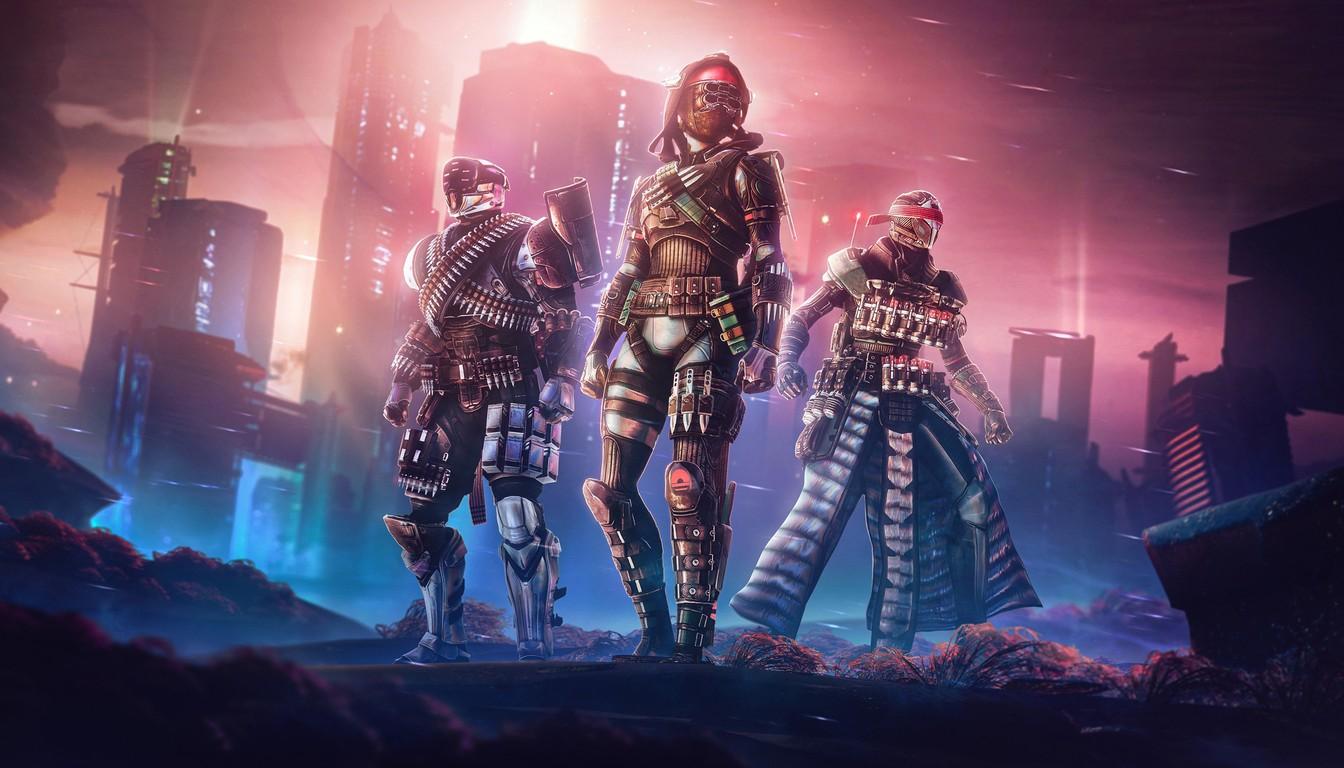
Titan: barriers, heavy melee hits, and the role of tank and anchor for the team.
Hunter: dodges, invisibility, throwing knives, and high mobility.
Warlock: healing rifts, a gliding jump, and devastating abilities.
Each class has five elemental subclasses: Arc (lightning), Solar (fire and light), Void (darkness), Stasis (cold and freezing), and Strand (threads and weaving). Stasis arrived in Beyond Light (2020) and Strand in Lightfall (2023). Prismatic from The Final Shape (2024) sits on top and lets you mix abilities from different elements. That makes 18 subclass options across all three classes. Kinetic is also called a damage type, but it has no subclass.
The class does not lock your style for the whole game, and you can create a second Guardian at any time. For the first hours, choose by feel: Titan forgives mistakes the most, Hunter offers speed, and Warlock is handy for support. Detailed builds can wait until you settle in.
Weapons and armor
Your gear splits into three weapon slots and five armor slots. Besides those you carry a Ghost, a Sparrow, and a Ship, which change looks and add minor conveniences. You can equip only one Exotic weapon and one Exotic armor piece at a time.
Weapon types include auto rifles, submachine guns, hand cannons, pulse rifles, scout rifles, sidearms, bows, shotguns, sniper rifles, fusion rifles, grenade launchers, rocket launchers, swords, glaives, and machine guns. Some types use heavy ammo, but shotguns and snipers also appear in regular slots. Among Exotics, well-known picks include Sleeper Simulant (a linear fusion rifle) and the Whisper of the Worm sniper rifle.
Slot | What goes in it | How to use it |
|---|---|---|
Kinetic weapon | Non-elemental weapons, often your primary | Steady damage against any target |
Energy weapon | Weapons with Arc, Solar, or Void damage | Match the color of enemy shields |
Power weapon | Heavy ammo | Big hits on bosses and elites |
Armor (5 pieces) | Helmet, gauntlets, chest, legs, class item | Stats and mods for your playstyle |
A note on stats: Armor 3.0 drops only from new content, meaning the Edge of Fate campaign, the raid, and the Portal. Older armor stays in the game, but for serious build tuning take the new pieces.
Rarity and gear tiers
Rarity is the familiar ladder: common (white), uncommon (green), rare (blue), legendary (purple), and Exotic (gold). Serious play happens on legendary and Exotic items.
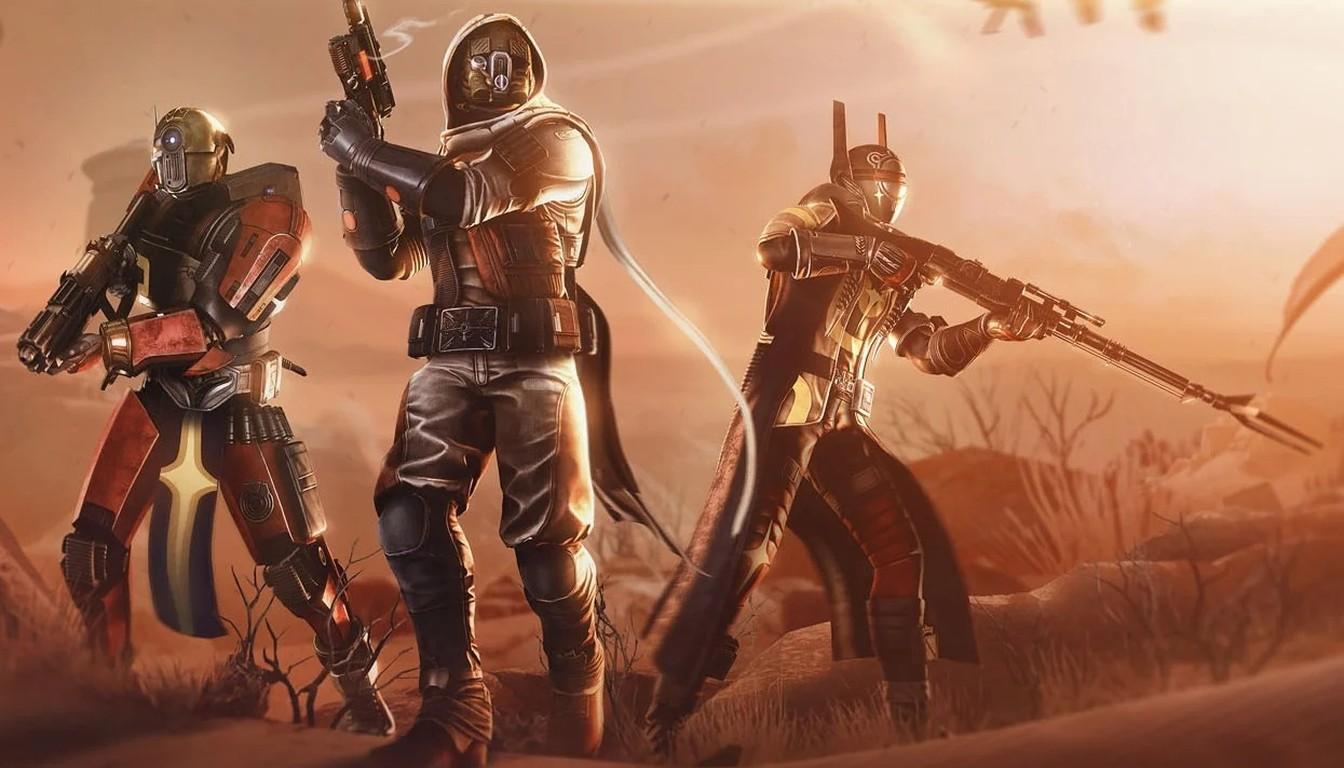
Separately from rarity, Edge of Fate introduced five quality tiers (Tier 1-5). The tier is set when an item drops and cannot be raised: a Tier 3 piece stays Tier 3. This system replaced the old weapon enhancement and adept schemes. When picking a weapon, look at both the perks and the tier.
A practical tip: do not dismantle everything in the first hours. Try an item in your hands before deciding. You do not need extra Exotics at the start, so one weapon and one armor piece you like are enough. If a specific collection goal appears later, such as Heirloom, you can work on it once you settle in.
The Portal and Power progression
After Edge of Fate, the Portal became the main way to grow. You pick an activity, tune the difficulty, and earn rewards that match your Power level. Returning players start from a low value, and new loot drops from roughly 300 Power. Check the current ceiling in game, since it has changed over time.
Campaigns and story missions also give Power and good gear. A simple order for the start:
Finish the introductory missions and unlock the first campaigns.
Open the Portal and play chosen activities, raising difficulty gradually.
Dismantle fresh rewards you do not need and equip the best.
If time is short, power leveling can cover this stage so you can move on to raids and dungeons. Still, playing the first activities yourself teaches you the game much better.
The Tower and vendors
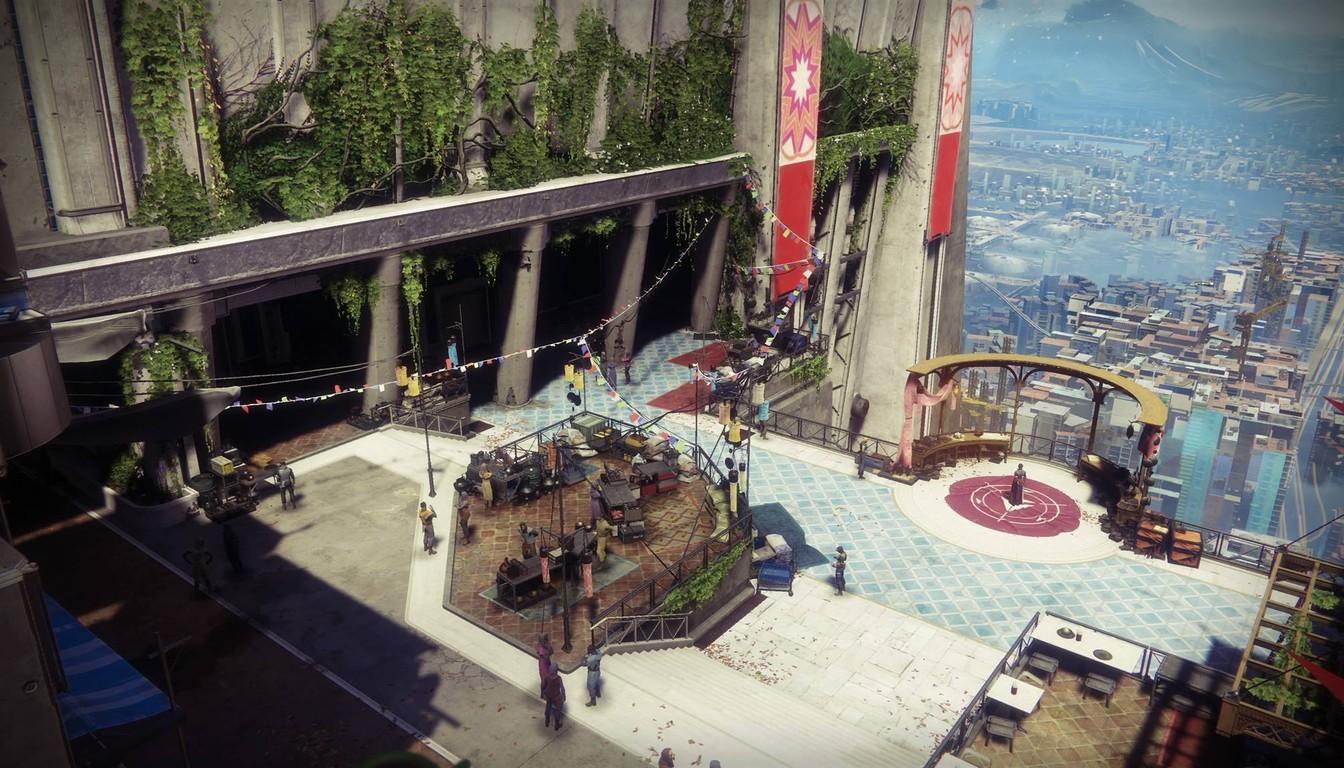
The Tower is a peaceful hub where weapons are disabled. You collect rewards there, swap gear, and form a fireteam.
Zavala: Vanguard activities and strikes.
Shaxx: the Crucible, which is PvP.
Drifter: his own mode and related rewards.
Banshee-44: weapons.
Ada-1: armor.
Rahool: engram decryption.
Eververse: a cosmetics store.
Edge of Fate removed reputation ranks for most Tower vendors, so there is no relationship grind to memorize. Visit vendors for quests and rewards, then head back into the game.
Activities after the intro missions
Once the basics are done, the full set opens up: strikes, dungeons, raids, the Crucible, and high-difficulty trials.
Strikes and Nightfalls are played in threes. The high-difficulty version is the Nightfall Ordeal Grandmaster, which you should enter with a finished build. Dungeons are built for three, for example the Equilibrium dungeon. Raids need a team of six, first of all The Desert Perpetual raid. Group trials such as The Pantheon: Calus Resplendent test how well you know the mechanics.
If the story interests you more, play the Renegades campaign: it opens new content and Armor 3.0 gear. Among Exotics, Ice Breaker is worth a look.
Tips for the first week
Play in a fireteam: raids and dungeons are easier, and Destiny 2 has no shortage of friendly communities and clans.
Match weapon element to enemy shield color: Arc, Solar, and Void shields break faster with their own element.
Check fresh Portal rewards before dismantling items.
Do not chase the meta build in the first days: get used to the gunplay and your abilities first.
Use DIM (Destiny Item Manager) for inventory, a long-standing helper for the community.
Try different classes: one account holds three characters.
A sensible first-week order: intro missions, one chosen class, a couple of hours in the Portal, then the first dungeon with friends or a random fireteam. Leave raids until you shoot confidently and understand your abilities. That way you will not waste an evening on mechanics you do not know yet.
Do not be afraid to ask: before a raid or dungeon, tell your team you are new and ask them to explain the mechanics.