How to Get Unique Items in PoE 2: Drops, Ritual, Orbs of Chance, Trading
What to Know About Unique Items Right Away
Unique items in Path of Exile 2 (PoE 2) come with fixed modifiers, and they often define a whole build. There are no official drop rates, so the advice below is qualitative: no percentages, just clear logic for picking a route.
There are five sources: Rare enemies and bosses, endgame Ritual rewards, Orbs of Chance, the gambling vendor in town, and trading with other players. The first four depend on luck, while trading gives you control over the result but costs currency. Which route fits depends on whether you want one specific item or any useful one.
The current league is Runes of Aldur. Patch 0.5.0 Return of the Ancients (May 29, 2026) rebuilt the Atlas around six questlines with pinnacle bosses and adjusted Ritual rewards. The methods below go in order, from the campaign to the endgame.
Rare Enemies and Bosses: The Backbone of Any Farm
A unique can drop from almost any monster, but the chance from common enemies is too small to build a route around. Rare enemies and bosses work noticeably better. The game does not publish exact percentages.
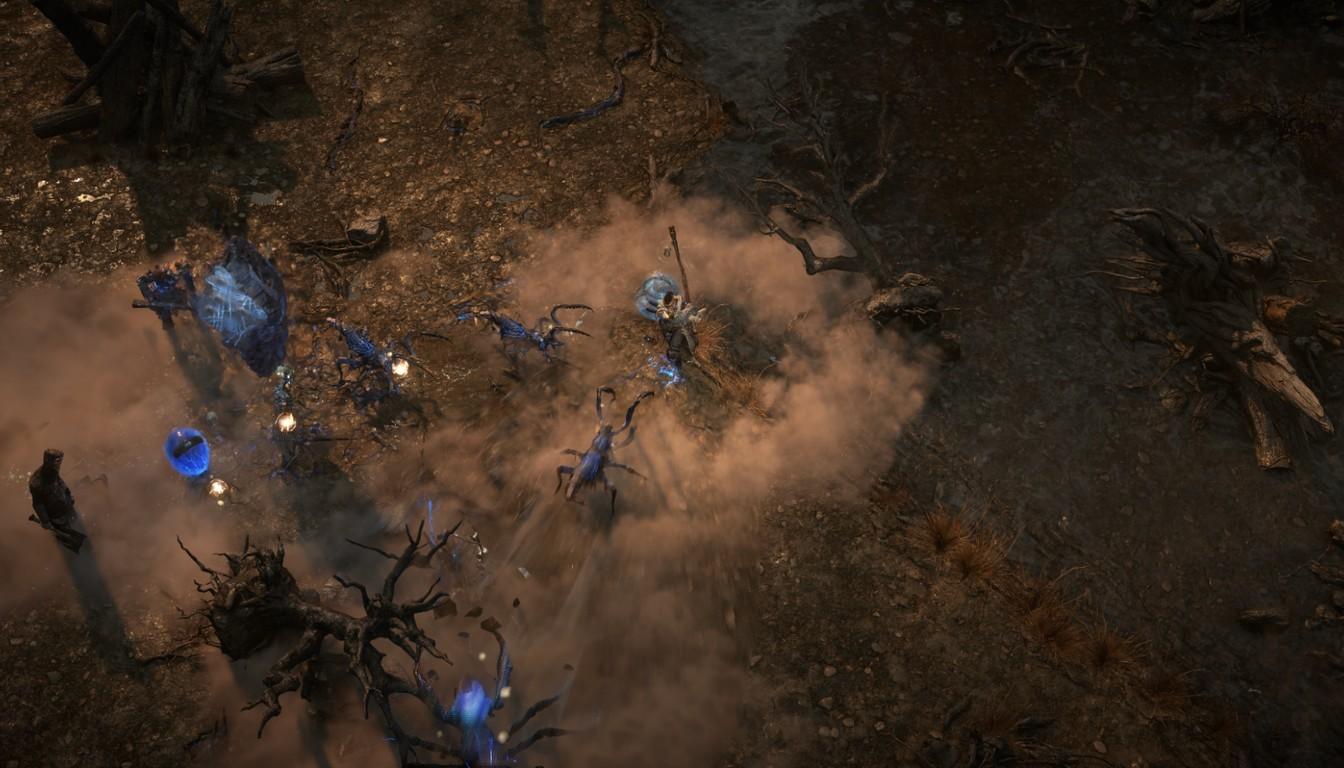
In the campaign, speed is the main criterion. Dense zones and a short path to the boss give more kills per hour than a hard fight that costs you portals and time. If a boss drags on, switch routes.
Rare enemies. Do not skip them: they show up in ordinary zones and usually die faster than bosses.
Campaign bosses. Good for early farming when the route is short and easy to reset. If you would rather not handle them yourself, DVING can have an experienced player kill the campaign bosses for you.
Dense zones. One run can give uniques, gold, currency and rare gear together.
Do not expect a unique to power up your character right away. At low levels a good rare item is often stronger than a weak unique. If you do not want to wait for luck, there is leveling gear.
A practical rhythm looks like this: enter a zone, kill every Rare, finish the boss, reset the route and repeat. Inspect uniques in town and disenchant the ones you do not need into Chance Shards, so every run feeds the next one.
Endgame: Map Bosses and Pinnacle Bosses
Endgame unique farming starts when you clear maps without constant deaths. From that point going back to the campaign for uniques rarely makes sense: maps are faster and closer to endgame rewards.
A map boss is worth farming if you kill it every time and finish within a few minutes. That gives a steady flow of chances without leaving your normal mapping loop. Pick maps that clear quickly and drop the ones where your build stalls.
Pinnacle bosses are for well-geared characters. You first unlock the boss through the Atlas questline, then go after it when your build can handle its mechanics. Summoning needs consumables: boss summoning resources are in the DVING catalog, and full boss kills can be ordered as a service. Check the current league reward lists to see which uniques each pinnacle boss can drop.
Ritual Rewards in the Endgame
Ritual fits neatly into mapping: clear the altars, look at the reward screen, move on. Since patch 0.5.0 the endgame Ritual reward screen offers only Uniques or Omens, which is the reason to pick it among league mechanics.
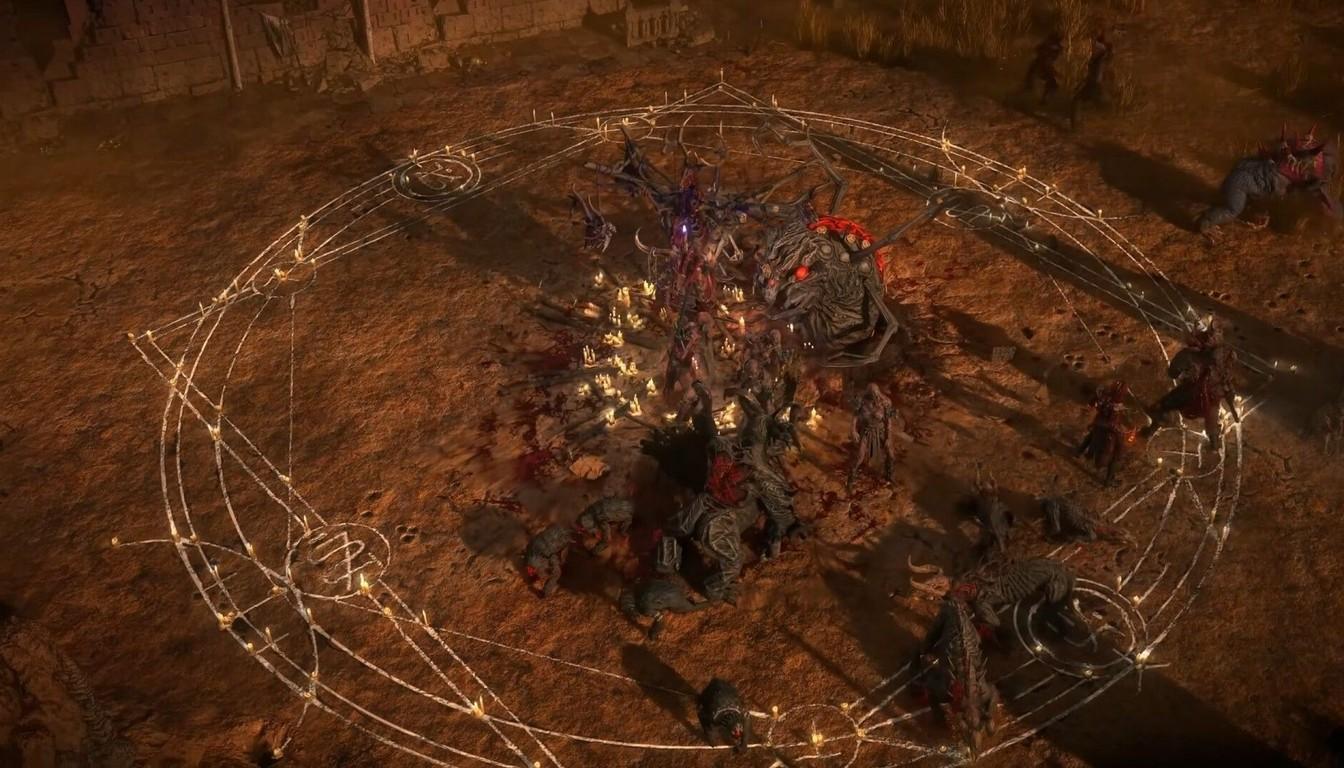
Tribute is spent to reroll rewards or choose the one you want. In a party each player has their own Tribute and rewards that cannot be rerolled, so nobody has to share the result. GGG publishes no drop rates, so treat Ritual as a solid addition, not a guaranteed source.
One caveat about the campaign: in patch 0.5.5 Forbidden Rites (September 4, 2026) campaign Rituals were changed to give currency and leveling gear instead of Uniques and Omens. So Ritual is a unique source in the endgame only.
You do not have to play every mechanic. If one slows your maps or makes them dangerous, skip it and return to the ones you clear with confidence.
Orbs of Chance and Chance Shards
This is the riskiest method. An Orb of Chance is used on a Normal (white) item: it either becomes a Unique of that same base or is destroyed.
That is why you should not throw an orb at a random item. If you are hunting a specific unique, you need the exact base it exists on. Want a unique shield? Do not waste orbs on wands. The odds are small: player estimates put the most sought-after items at a fraction of a percent.
Where orbs and shards come from:
Chance Shards drop anywhere, and 10 shards combine into one Orb of Chance;
a unique can be disenchanted into shards, by default one shard per item;
full orbs also drop from enemies.
Omen of the Ancients changes the result of your next Orb of Chance: you get a random unique of the same item class, not necessarily the same base. For example, a Heavy Belt can turn into Coward's Legacy.
The Gambling Vendor: A Bet in Gold
In town there is a vendor who sells items of random rarity for gold. You pick a weapon, armour by attribute or jewellery, and the result is unknown in advance. Most results are magic and rare items; a unique is possible but too rare to count on.
You cannot get a specific unique this way. The best use of gambling is fixing a weak slot in the campaign. If your gloves are bad, buy another pair of gloves rather than a weapon you do not need.
Campaign purchases are capped per Act, and each unique monster you kill in the Act raises the cap by one.
Do not spend all your gold on one bet: some of it will be needed in the endgame.
If your current item is already good, skip gambling.
Trading: The Fast Route to an Exact Item
If you need one specific unique, the market is the fastest way. You search the trade site or the Currency Exchange, compare prices and buy. Before purchasing, check the item tooltip: some items may have restrictions on trading.
Trading makes sense when:
you need exactly one item for your build;
the item is cheaper than hours of farming;
your current gear blocks progress;
you have already checked the stats and rolls you need.
Prices are usually quoted in Divine Orbs, Exalted Orbs and Chaos Orbs, so currency farming stays part of the plan. Trading does not replace farming entirely, but for a specific target it is usually more reliable than waiting for random drops.
A Beginner Route and a Comparison of Methods
A simple plan is enough to start: kill Rare enemies, farm only fast bosses, gamble for one weak slot, save Orbs of Chance for the right bases, and check the market before spending hours farming. Once your build is stable, move to maps, then to Ritual and pinnacle bosses.
If time is short, league starter builds help at the start, and power leveling gets your character to the endgame without a long campaign.
Method | When it fits | Control over result |
|---|---|---|
Rare enemies and bosses | Campaign and early maps | None |
Map and pinnacle bosses | Your build clears the endgame with confidence | None |
Ritual | Endgame, reward screen | Choice from the offer |
Orbs of Chance | You have the right base | Low |
Gambling vendor | You need to fix a weak slot | Low |
Trading | You need a specific item | Full |