WoW Forever Enchanting Guide: Leveling 1-300, Recipes and Disenchanting
How Enchanting Works and What Matters First
Enchanting in WoW Forever follows the Classic formula: you disenchant unwanted gear into dust, essences and shards, then use those materials to permanently improve equipment. Skill runs from 1 to 300, and the Apprentice, Journeyman, Expert and Artisan ranks unlock through trainers as you grow.
The big difference from neighboring crafts is that you do not need a gathering profession. Materials come from green and better items, so your supply depends on what drops from mobs, dungeons and the auction house.
Leveling takes roughly 400 to 470 crafts, depending on the route and your luck with skill-ups. Below you will find what is new, the camp upgrades, a step-by-step route, a shopping overview and ways to earn gold.
What Is New in Forever
The profession has grown noticeably. Enchanters now make not only enchants and oils but also wands, staves, off-hands and class relics: idols, totems and librams. According to player reports, the beta has around 238 Enchanting recipes, and a good share of them are new.

Mote of Magic. A new material. The Dust to Motes recipe turns 1 Strange Dust into 3 Motes of Magic, and those go into your very first recipes.
New enchants. According to player reports, Forever adds enchants for Agility, Strength, Healing Power and Spell Power, plus necklaces, bracers, gloves and weapons.
Enchanted materials. By the same reports, from around 250 skill an Enchanter can make Enchanted Leather and Enchanted Thorium Bars for other professions.
Favor formulas. Some of the new formulas unlock through the Merchant's Favor system at the Azeroth Commerce Authority.
Camp Upgrades and Disenchanting
Enchanters get three camp upgrades of their own. All of them work next to a campfire, and every camp feature shares a one-hour cooldown.
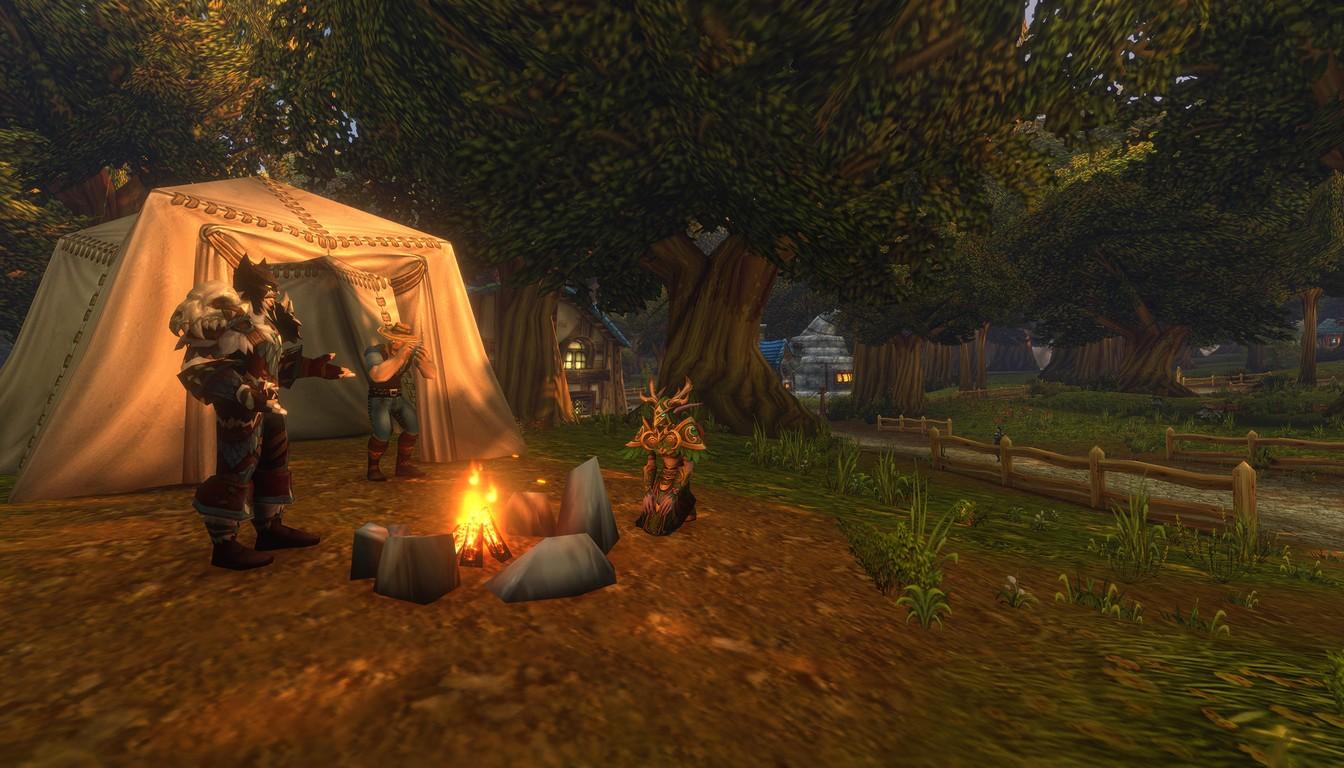
Enchanted Lute (skill 20). Buffs armor, stats and resistances. It does not stack with Mark of the Wild.
Arcane Salvager (skill 140). Improves disenchanting and keeps the Lute buffs. It needs 2 Vision Dust and 1 Lesser Nether Essence, and it comes from a Blueprint rather than a trainer.
Arcane Forge (skill 300). A workspace for recipes that require it, with the same Lute buffs.
For an Enchanter the Salvager is the real prize: it makes every disenchant more rewarding, so each spare green item becomes a slightly bigger pile of materials. Keep in mind that you need a campfire nearby and that all camp features share that hour of cooldown, so plan their use ahead.
Before you vendor a replaced item, compare the vendor price with what its materials fetch at the auction house. Sometimes the vendor wins, sometimes the dust and essences are worth far more. Gear that drops in dungeons is often better off in your disenchanting pile than in a vendor's bag.
The 1-300 Leveling Route
According to player reports, recipe skill thresholds are close to Classic, so familiar routes mostly work. Below is one popular 11-step variant that totals about 413 crafts. Yellow and green recipes do not guarantee a skill point, so your real count will differ.
Skill | Recipe | Crafts |
|---|---|---|
1-24 | Enchant Bracer - Inferior Stamina | 26 |
24-70 | Enchant Bracer - Minor Deflect | 46 |
70-117 | Enchant Chest - Minor Absorption | 64 |
117-135 | Greater Magic Wand | 31 |
135-165 | Enchant Cloak - Minor Agility | 54 |
165-185 | Enchant Boots - Lesser Agility | 21 |
185-220 | Enchant Bracer - Strength | 43 |
220-226 | Enchant Cloak - Greater Defense | 6 |
226-286 | Enchant Boots - Agility | 87 |
286-296 | Enchant Weapon - Greater Striking | 29 |
296-300 | Enchant Shield - Greater Stamina | 6 |
A good habit is to check material prices at the auction house before each step and, if a needed essence has spiked, look for another recipe in the same skill range with cheaper reagents.
Other authors count up to 466 crafts and around 136 gold of spending on the auction house, so treat the table as a guide.
Ranks and Training
Train each rank on time: without the next one, your skill hits a cap and stops rising. On the Classic pattern the thresholds are:
Journeyman: skill 50 and character level 10, train before 75.
Expert: skill 125 and level 20, train before 150.
Artisan: skill 200 and level 35, train before 225.
Artisan is taught by Annora, and you will find her inside the Uldaman dungeon. Visit it early and with a group rather than five minutes before the skill 225 cap. If you are planning your 1-60 leveling, add this trip to the overall path.
Materials and Rods
Different stages of leveling need different Runed Rods, so check which one a recipe requires before you buy materials.
Runed Copper Rod: a Copper Rod and 1 Mote of Magic. You can buy the rod and Motes from an Enchanting supplies vendor in the capitals.
Runed Silver Rod: needed around skill 135. The Silver Rod usually comes from a Blacksmith or the auction house.
Runed Golden Rod: an intermediate rod between the Silver and the Truesilver.
Runed Truesilver Rod: needed around 200-220.
On the popular route the core shopping list is about 176 Lesser Magic Essence, 116 Greater Nether Essence, around 54 Lesser Astral Essence, 50 Vision Dust, 36 Dream Dust and 29 Large Radiant Shard. These numbers are approximate and depend on the route. Rare materials are easier to buy or get from other players, while simple items like the copper rod and Motes come cheaper from vendors.
The budget is easy to underestimate, since prices on your realm will swing in the first weeks after launch. Stock up in batches instead of buying everything at once.
Also remember that Enchanting materials cannot be farmed from nodes on purpose, so essence and shard prices can jump. If Greater Nether Essence is expensive, you either pay up or disenchant more gear.
Making Gold With Enchanting
The profession stays a solid source of income: players swap gear constantly, and every upgrade is a reason to buy an enchant. You can supply the materials and charge the full price, or take only a fee when the customer brings the reagents. More ideas are collected in our overview of earning gold.
Rare formulas. The harder an enchant is to obtain, the fewer rivals you have.
Weapon oils. These are consumables, so buyers keep coming back.
Disenchanting. A cheap item is sometimes worth more as dust or shards.
New items. Wands, staves, off-hands and relics.
Merchant's Favor formulas. According to player reports, some weapon, necklace, bracer and glove formulas cost 45, 120 or 240 Favor. Few players know the expensive recipes, and you can use that.
If ten Enchanters on a server know a recipe instead of a thousand, you sell at a much better price. High-level caster and healer enchants are worth watching in particular, because players want them stocked before raids, and our guides to pre-raid gear and raid gear show what to wear under them.
Which Profession to Pair With It
Many players consider Tailoring the best partner. Cloth drops almost everywhere, the tailor sews it into gear, and the Enchanter disenchants that gear into dust and essences. The loop runs without any ore, herbs or leather.
Other crafts can work too, but then you have to source the raw materials some other way. If you want a self-sufficient caster character, take Tailoring and Enchanting together. If another character of yours already handles crafted gear, Enchanting can stay a standalone craft.