WoW Forever Professions Changes - What's New in All 12 Professions
What Stayed From Classic and What Is New
Twelve professions, the 300 skill cap and the familiar four ranks are all still here. Recipes still use fixed materials, and a crafted item always has the same stats. The new parts are built around that frame: more than 600 recipes, camp objects, Legacy Points for skill milestones, and a trade reputation with its own currency, Merchant's Favor.
The practical difference is how soon crafting pays off. In Classic it became worth the effort close to level 60, while in WoW Forever (launched November 4, 2026, patch 1.60.1) useful items are available from the first skill points. It makes sense to level a profession together with your character instead of putting it off.
Below you will find the shared systems first and then all twelve professions in order. If you are picking a first pair, read the camp and crafting sections before anything else.
Slots, Ranks and First Steps
A character still learns two primary professions and three secondary ones: Cooking, First Aid and Fishing. Here is what differs from Classic:
Topic | WoW Classic | WoW Forever |
|---|---|---|
New recipes | None | 600+ across all level ranges |
Camp objects | None | Three per profession |
Legacy Points | None | Awarded at skill 150, 225 and 300 |
Trade reputation | None | Two trade camps and a new currency |
Healing Potions | Alchemy | First Aid |
Cooked food | Well Fed buff | Well Fed plus 5% experience from kills |
First gathering profession | City trainer | Trainer or a manual from a starting-zone quest |
Reagent bags | None | Made by Tailors and Leatherworkers |
Profession racials | +15 skill | New effects |
The ranks are the same: Apprentice, Journeyman, Expert and Artisan, each raising the skill cap by 75. You learn them from a trainer at character levels 10, 20 and 35. Every starting zone now has a junior trainer for Herbalism, Mining and Skinning, for example Nancy Songflower in Northshire. That trainer teaches only the Apprentice rank.
You can also pick up a gathering profession without visiting a trainer. One quest in each starting zone offers a choice of the Wild Harvest, Mining for Dummies and Pelt Collecting for Beginners manuals. A manual teaches the profession if you know fewer than two and adds up to 15 skill points. While you work through 1-60 leveling, a starter gathering profession supplies materials for your first recipes.
The Camp: Objects, Buffs and Blueprints
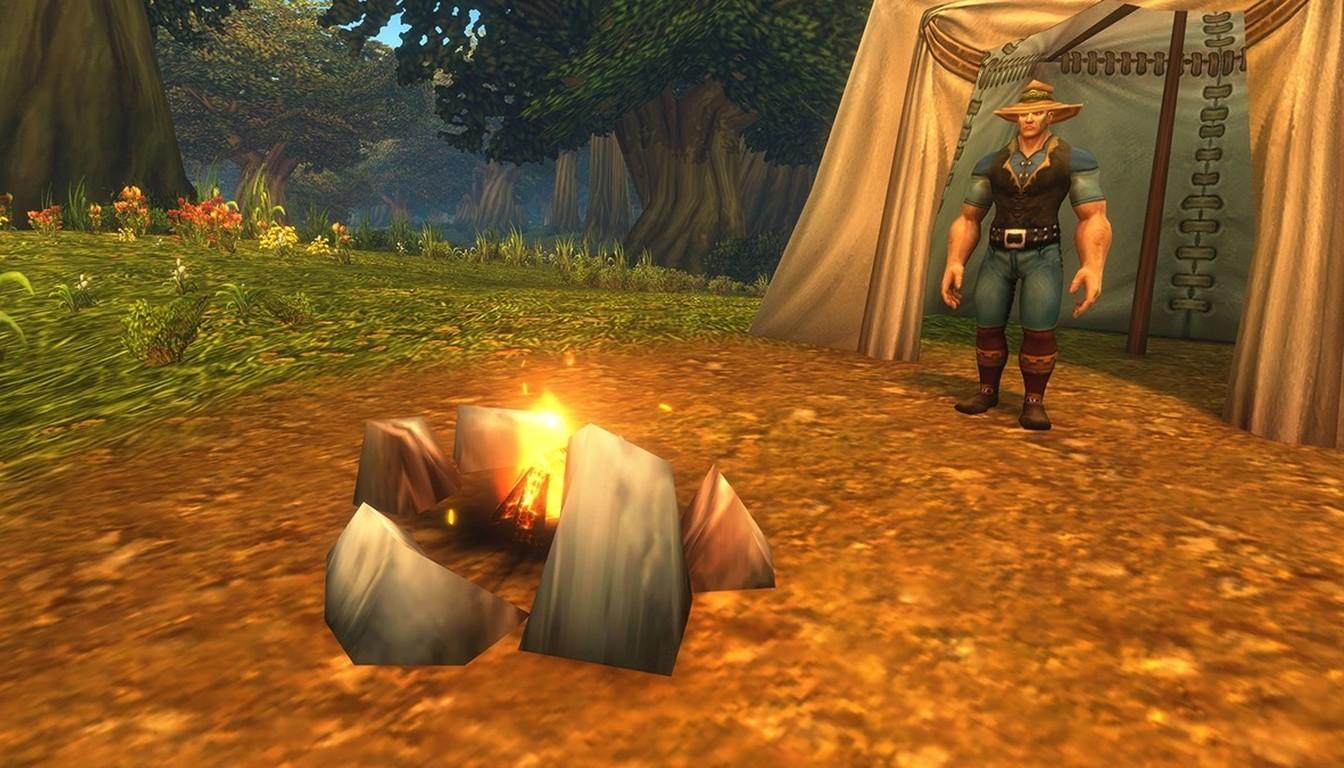
Every profession now has three camp objects placed at a Campfire. You learn the first one from a trainer at 20 skill. Blueprints teach the second and third object at 140 and 300 skill. An upgraded object keeps the effect of the previous one and adds a service, such as a crafting station for recipes or a spot where ore and herbs appear.
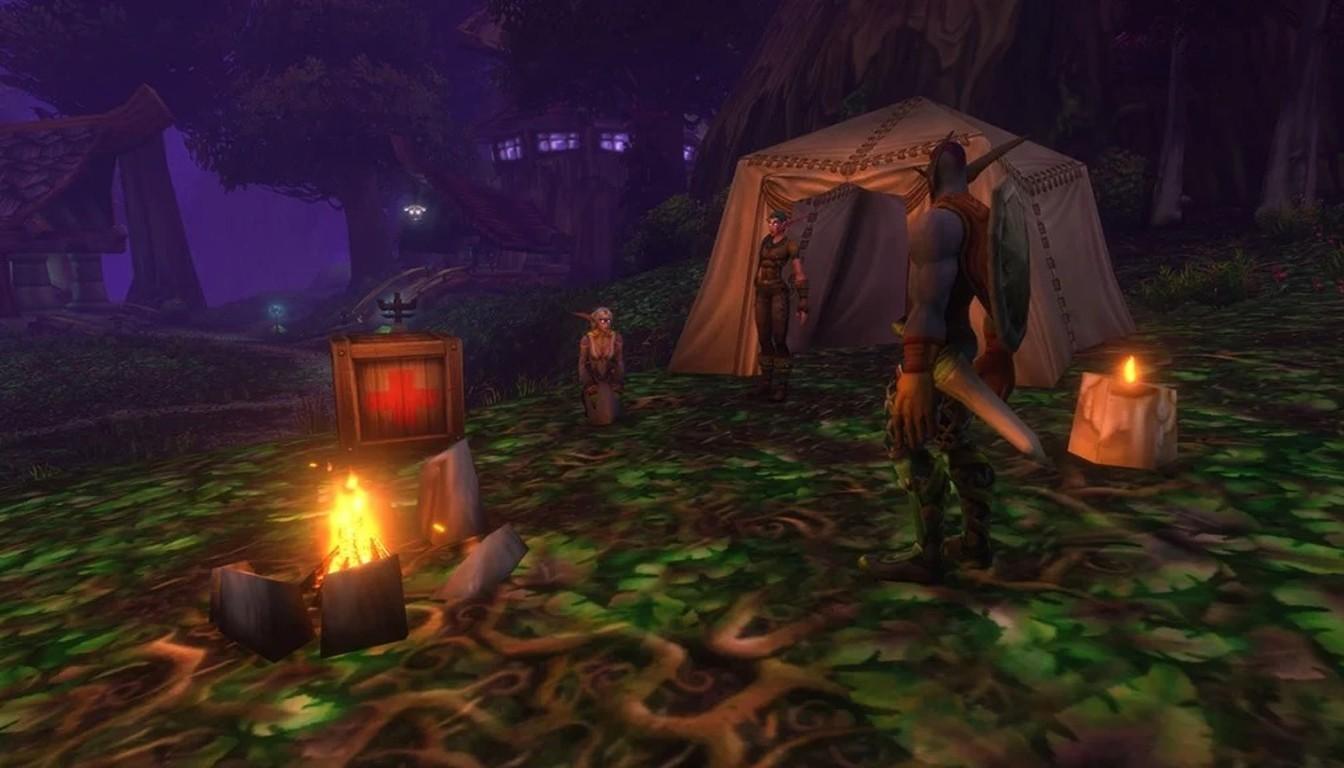
Most first-tier objects copy class buffs, so a camp buff and the matching class buff do not stack:
Mana Well (Alchemy) mirrors Blessing of Wisdom.
Incense Candle (Herbalism) stands in for Arcane Intellect.
Lodestone (Mining) plays the role of Blessing of Might.
Enchanted Lute (Enchanting) works like Mark of the Wild.
First Aid Kit (First Aid) matches Power Word: Fortitude.
Fish Bowl (Fishing) gives +8% to all stats, excluding the effect of Blessing of Kings.
Some objects have no combat buff. The Leatherworking Camp Tent stores bonus rested experience up to 5% of a level once per hour, and the Engineering Reagent Bot sells reagents. Buff values grow with your level, so check exact numbers in game. For a group missing a class, a camp is a ready replacement for that buffer.
According to player reports, second-tier blueprints drop from dungeon bosses:
The Alchemy Fermenter is linked to Rath'mael in Ruins of Lordaeron.
Blacksmiths, Engineers and Cooks look to Gilnid, Sneed and Cookie in The Deadmines.
Leatherworkers and First Aid users head to Shadowfang Keep for Razorclaw the Butcher and Commander Springvale.
The Herbalism Greenhouse and Mining Rock Garden need Shadetooth and Relic Guardian from Excavation Site: Wetlands.
The Skinning Field Guide drops from Lady Anacondra in Wailing Caverns, and the Fishing Rack from Gelihast in Blackfathom Deeps.
The Trapper's Workbench comes from Houndmaster Loksey in Scarlet Monastery.
Third-tier objects require 300 skill and are built for the end of a profession's leveling. Campfire rules and the best camp setups have their own guide, our camping article.
Merchant's Favor and Craftsman's Writs
Merchant's Favor is earned at two trade camps, one per faction. You fill Waylaid Supplies crates with your profession's materials and turn them in at the camp. A crate pays out currency and reputation, and the amount depends on its rank and quality. Favor is tracked per character, and camp vendors sell over 300 recipes. Some new patterns, such as necklace enchants and larger reagent bags, are sold only there.
Those purchases add up, and if you would rather not farm every reagent yourself, see the gold guide.
Craftsman's Writs are rare world drops that start a profession quest: you craft a specific item and hand it to an NPC. According to player reports, a writ quest can be done once per day, and the writs that drop match the level of your zone. You can sell a writ on the Auction House or buy one for your own profession. They exist for Alchemy, Blacksmithing, Engineering, Leatherworking and Tailoring. According to player reports, a Journeyman writ gives up to 125 reputation with the trade camp plus a Coin Pouch. Writ reputation is separate from Favor, so neither track replaces the other.
Crafting: What Changed in the Six Producing Professions
All six producing professions gained leveling recipes, new camp objects and endgame items. The growth is most visible in Leatherworking, Blacksmithing and Tailoring, which players count at roughly 270, 200 and 180 new recipes. The profession details below come from player descriptions.
Crafted gear now comes in role variants at the same level. At 35 skill a Blacksmith learns three versions of copper boots: Strength, healer and caster, all wearable from level 10. At 300 skill Blacksmiths, Leatherworkers and Tailors craft class set pieces. Only one such piece is equipped by default, and crafting needs Malleable Essence of Nature, which comes from disenchanting items from the Hyjal Summit and Barrow Deeps raids. Raids open on December 9, 2026, so until then these sets depend heavily on the market. For the bigger picture, see the tier set and pre-raid gear guides.
Alchemy. Healing Potions left, but the Discolored Healing Potion line stayed along with three combat lines: Mender's Potion, Spellblasting Potion and Frenzy Potion. Alchemists also make dyes like Cerulean Dye for Tailors and Enchanters, and Transmute: Legionite produces bars for new endgame gear.
Blacksmithing. Chain belts at 45 skill, the Azure and Cloudy Skyforged sets from 50, and at 300 pieces for Warriors and Paladins plus weapons from Legionite and Heavy Thorium Bar.
Enchanting. Staves like Glimmering Staff, wands starting with Novice's Practice Wand, which every Enchanter learns, plus relics, librams and totems. Dust to Motes turns dust into Mote of Magic.
Engineering. SAF-T and EZ-Thro bombs can be used without the profession, so Engineers can sell them to others. Items like Goblin Sapper Charge stay Engineer-only.
Leatherworking. Six role sets, the Camp Tent, and permanent armor kits that add Stamina, from the Light Armor Kit up to the Rugged Armor Kit. At 300 skill it covers Druids, Rogues, Hunters and Shamans.
Tailoring. Reagent bags from the 6-slot Linen Reagent Bag to the 14-slot Runecloth Reagent Bag. They use a separate slot and hold only crafting materials. At 300 skill Tailors sew pieces for Mages, Priests and Warlocks.
Gathering: Herbalism, Mining and Skinning
Gathering professions gained Scarce materials, bonus reagents that sometimes drop while you gather, such as Frilled Lichen from herbs or Pristine Leather from beasts. New recipes need them, and the Bountiful Harvest Legacy perk makes them appear more often.

Herbalism turned into gardening: the Greenhouse grows seeds at camp, and the Seed Hybridizer improves the plants at 300 skill. The Incense Candle is available at 20 skill and the Greenhouse at 140. Mining added Azerothium Bar, smelted from Scarce ore, and Heavy Thorium Bar, which is smelted from Heavy Thorium Ore found in Mount Hyjal at a Molten Foundry at 300 skill. The Rock Garden slowly spawns a common mining node near your camp.
Skinning gives the Camp Chair with a critical strike buff, Scarce hides and scales, and Fel Leather for endgame Leatherworking. That makes Skinning plus Leatherworking a pair that barely depends on the market.
Cooking, First Aid and Fishing
Secondary professions do not use a primary slot, so any class can learn all three. That now matters for real character power, not just convenience.

Cooking. Most Well Fed dishes add 5% experience from kills, for example Herb Baked Egg. The bonus is the same at every level, so cooking pays off along the whole leveling path. Cooking also teaches the Basic Campfire Kit, which makes the cook the one who starts a camp.
First Aid. Healing Potions from Minor to Major are now made here. Minor opens near the start of the profession (players put it at around 55 skill), and Major Healing Potion is available at 275. The potions use spices and an herb, so any class can make its own without Alchemy. The profession also has anti-venoms and potions against poison, disease and bleed effects, plus the First Aid Kit for camp.
Fishing. Besides the Fish Bowl, the profession has the Stranglethorn Fishing Extravaganza. It runs on Sundays from 2 to 4 PM region time, and the Master Angler quest now rewards the first 50 players instead of a single winner like in Classic. Players name an Arcanite Fishing Pole and a tradable coin as the reward, and the pole needs 300 Fishing.
Racials and Legacy: What to Weigh When You Choose
The +15 skill racial bonus for Tauren and Gnomes is gone. According to player reports, Tauren Cultivation grows a copy of a nearby plant, and Gnome Engineering Specialization now lowers the chance of device failures. These effects should not decide your pick, but a Tauren herbalist gets a nice addition to gardening.
Legacy Points for skill are awarded once per account: one point each for reaching 150, 225 and 300 in a producing profession. Collecting all six adds up to 18 points, and the Professions tab of the tree offers perks. Working Overtime has five ranks at +4% chance per rank to gain a skill point, and Dedicated Study raises your lowest profession by one every 23 hours.
A short way to choose. For solo leveling, take Skinning with Leatherworking or Herbalism with Alchemy. For a group, any pair with a useful camp buff works. Learn Cooking and First Aid on every character, since they are free in slot terms and give experience and potions. The sooner you start, the sooner you collect the first Legacy Points and role gear.