Best WoW Midnight Healers for Raids and Mythic+
Holy Paladin and Restoration Shaman occupy the top category in the current Icy Veins Mythic+ list. Its raid table instead places Restoration Druid, Holy Priest and Discipline Priest in the highest group. Those results provide a useful starting point, but choosing a character also involves your team, familiarity with encounters and preferred way of healing.
This guide was checked on October 14, 2026 for Midnight Season 2 in the context of patch 12.1.5. It separates raids from Mythic+, explains all seven healing specializations and offers a practical way to choose between them. The categories are a named guide author's assessment, not an official Blizzard ranking or a new measurement of player performance.
Raid and Mythic+ healer rankings
The table uses the Icy Veins raid list updated October 11 and its Mythic+ list updated October 12. S denotes the highest category in each list, followed by A+, A and B where applicable. Letters are not numerical healing gaps, and categories from different modes should not be added together. Row order does not rank healers within a shared category.
Specialization | Raids | Mythic+ |
Holy Paladin | B | S |
Restoration Shaman | A | S |
Restoration Druid | S | A+ |
Mistweaver Monk | B | A |
Preservation Evoker | A | A |
Holy Priest | S | B |
Discipline Priest | S | B |
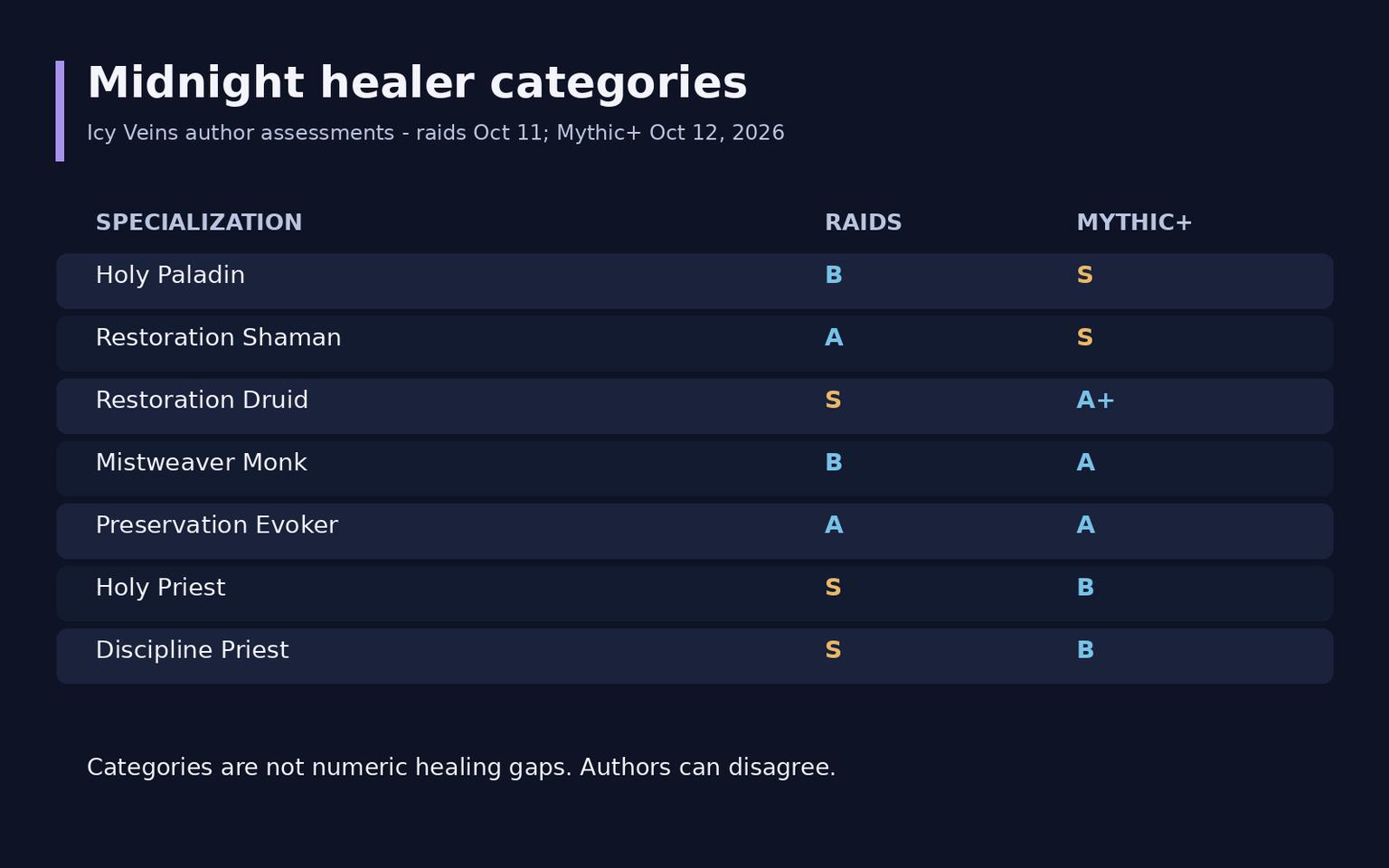
A lower category does not mean that a specialization cannot complete a normal raid or an appropriate key. Such lists are especially relevant when discussing demanding content, where small differences in protection, utility and team composition matter more.
Independent authors disagree. Wowhead's Mythic+ list dated October 13 places Restoration Druid in C, while Icy Veins assigns it A+. A recent date does not remove differences in approach or assumptions. This guide therefore keeps one clearly identified ranking system instead of assembling a flattering position for each healer from several lists.
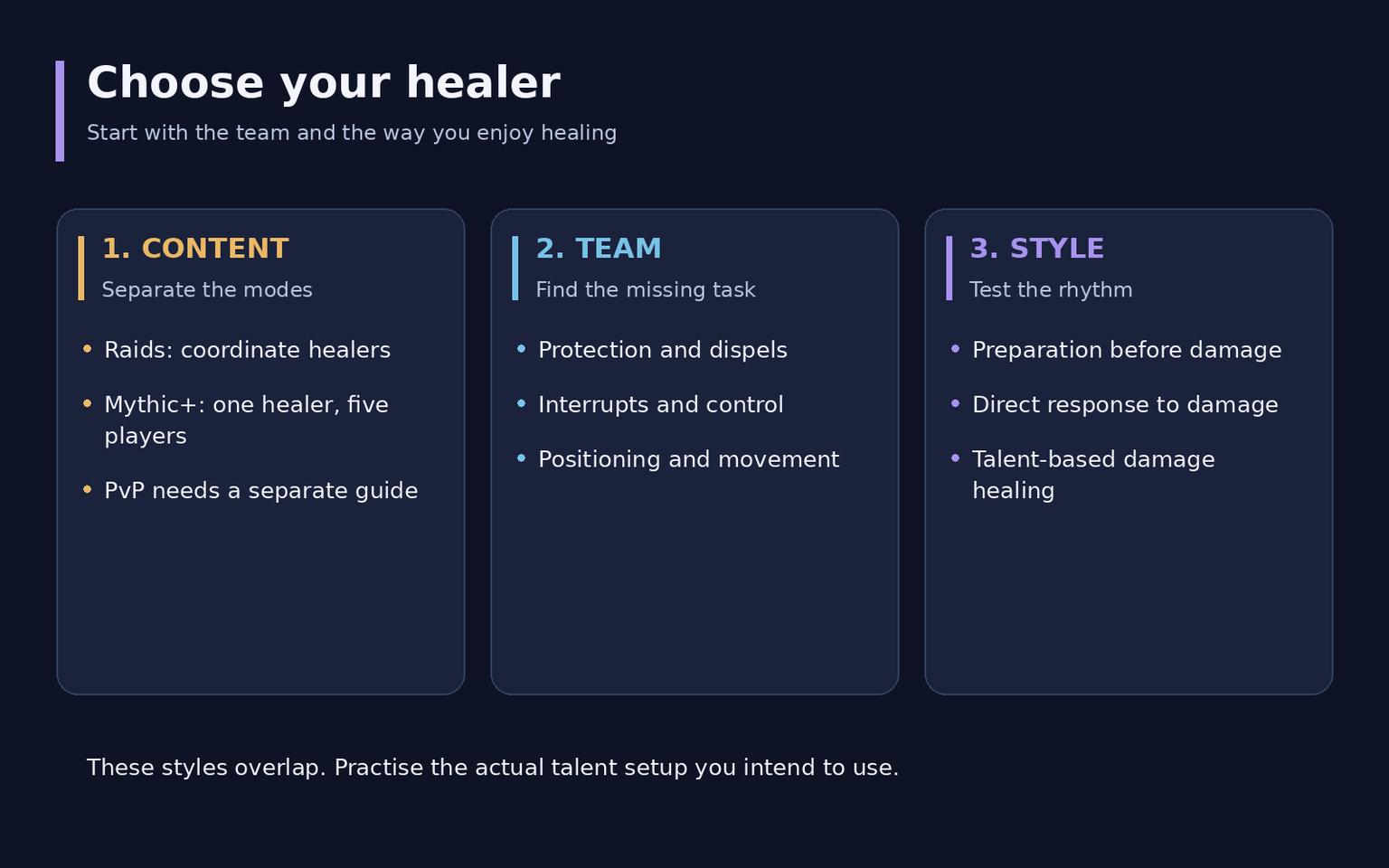
For a regular team, first ask what it already covers. Another source of similar healing may be less valuable than missing protection or a suitable dispel. In an unfamiliar group, reliably performing basic tasks matters more than selecting a character solely for a letter.
Choose a healer by playstyle
Holy Paladin
Holy Paladin suits players who enjoy responding quickly to individual allies while contributing protection. Holy Shock is an important part of its toolkit, with Holy Power spending shaped by the chosen talents. Defensive blessings and auras add value beyond the amount of health restored.
Its top Mythic+ category does not automatically apply to raids. Targeted assistance and protective tools can be particularly noticeable in a small group. Resource management, positioning and timing still matter: rescuing one ally does not replace preparation for the next damage sequence.
Consider Paladin if active support for specific players sounds appealing. Before a difficult key, learn what a chosen blessing actually removes or prevents. A defensive spell is not a universal answer to every encounter mechanic.
Restoration Shaman
Restoration Shaman combines direct healing, periodic effects and tools for allies in suitable positions. Healing Rain rewards a group that can benefit from its area. Spirit Link redistributes health among allies within its range, making placement and player presence important.
Wind Shear and additional control or dispel tools contribute to dungeon play. Shaman is a useful candidate for a team that needs active help against dangerous enemies, but those tools have to be used. Merely having an interrupt available does not reduce incoming damage.
Choose Shaman if you enjoy managing the space around your group and moving between healing and utility. Do not assume teammates will remain in a healing area. Plan for their actual movement during mobile encounters.
Restoration Druid
Restoration Druid relies heavily on healing effects applied before expected damage. Rejuvenation and other effects help prepare allies, while Ironbark offers targeted protection. The broader class toolkit also brings useful movement and support options.
This approach appeals to players who like reading encounters ahead of time. Waiting until the entire group loses health before beginning preparation sacrifices part of its advantage. Druid still has urgent healing options; it is not restricted to slowly restoring health, and decisions depend on talents and circumstances.
The disagreement between ranking authors is particularly visible here. Do not pick or reject Druid from a single category alone. Try maintaining and refreshing effects while moving and handling mechanics, then decide whether that rhythm fits you.
Mistweaver Monk
Mistweaver combines flexible healing with strong mobility and personal defensive options. Depending on talents, part of its healing is linked to dealing damage, but the specialization is not confined to one compulsory approach. Renewing Mist and Vivify are among its central healing tools.
Its value also includes control and other class utility. Compare how comfortably you use the complete toolkit in a particular encounter, rather than judging only total healing. Mobility helps when movement also allows you to assist allies on time.
Consider Monk if you enjoy active positioning and combining different actions. Learn the talent setup you actually intend to play: habits from one version do not necessarily transfer unchanged to another.
Preservation Evoker
Preservation rewards organizing healing around allies in suitable positions. Dream Breath and combinations involving Echo require attention to direction, range and timing. Rewind helps recover health after damage has occurred, so choosing the right moment is part of its value.
Range limits and the shape of individual abilities make group positioning particularly relevant. Helping everyone at once becomes harder when players spread across a large area. That does not prohibit mobile encounters; it means you should plan your own position and movement.
Choose Preservation if building prepared sequences of abilities appeals to you. First make healing reach the intended players consistently, then optimize more involved talent interactions.
Holy Priest
Holy Priest offers a clear foundation of direct healing and powerful Holy Words for individual allies or the group. Prayer of Mending complements that toolkit. Talents determine which combinations and cooldown-reduction patterns matter most in a particular build.
It can be a useful introduction to healing if responding directly to health changes feels more comfortable than preparing a lengthy sequence. However, a high raid category does not imply the same Mythic+ position. Dungeons emphasize different demands on survival, utility and the pace of a small group.
Holy still benefits from planning. Even predominantly reactive healing works better when the necessary ability is ready and the player knows who will need help next.
Discipline Priest
Discipline combines healing, protection and damage. Atonement converts suitable damage into healing for allies who have been prepared. The important question is not just which attack to use, but whom to prepare before a dangerous event and how much time that preparation needs.
The specialization suits players who enjoy arranging sequences around an encounter's schedule. Pain Suppression provides targeted protection. Dealing damage does not remove the need for direct assistance or defensive tools: the mechanic requires correct setup rather than simply attacking continuously.
Coordinate major abilities in raids. For early dungeon practice, use a clear plan on familiar enemies before carrying a more complex sequence into an unfamiliar key.
What matters in raids
A raid has several healers, so a specialization's value depends on how it complements the others. Discuss who handles group damage, who protects a tank and which abilities are reserved for the most dangerous events. Using every major defensive at once can leave the following event uncovered.
Do not compare players solely through total healing. Incoming damage, healer count and assigned responsibilities affect those numbers. Preventing a death or completing an assigned dispel can matter more than extra healing on an already safe target.
When the roster already covers the required tasks, a familiar specialization is often a sensible choice. Switching is more useful when you can identify the problem it solves and the practice needed to play it reliably.
What matters in Mythic+
In a five-player group, one healer handles healing while mistakes can quickly become urgent demands. Dispels, interrupts, control, personal defensives and safe opportunities to deal damage also matter. Agree how the entire group will share those responsibilities.
Start with a familiar route. Notice where health drops sharply and where damage continues over time. Avoid spending every strong ability on the first alarming moment if a more dangerous event immediately follows. Equally, do not save them until the end while an ally dies.
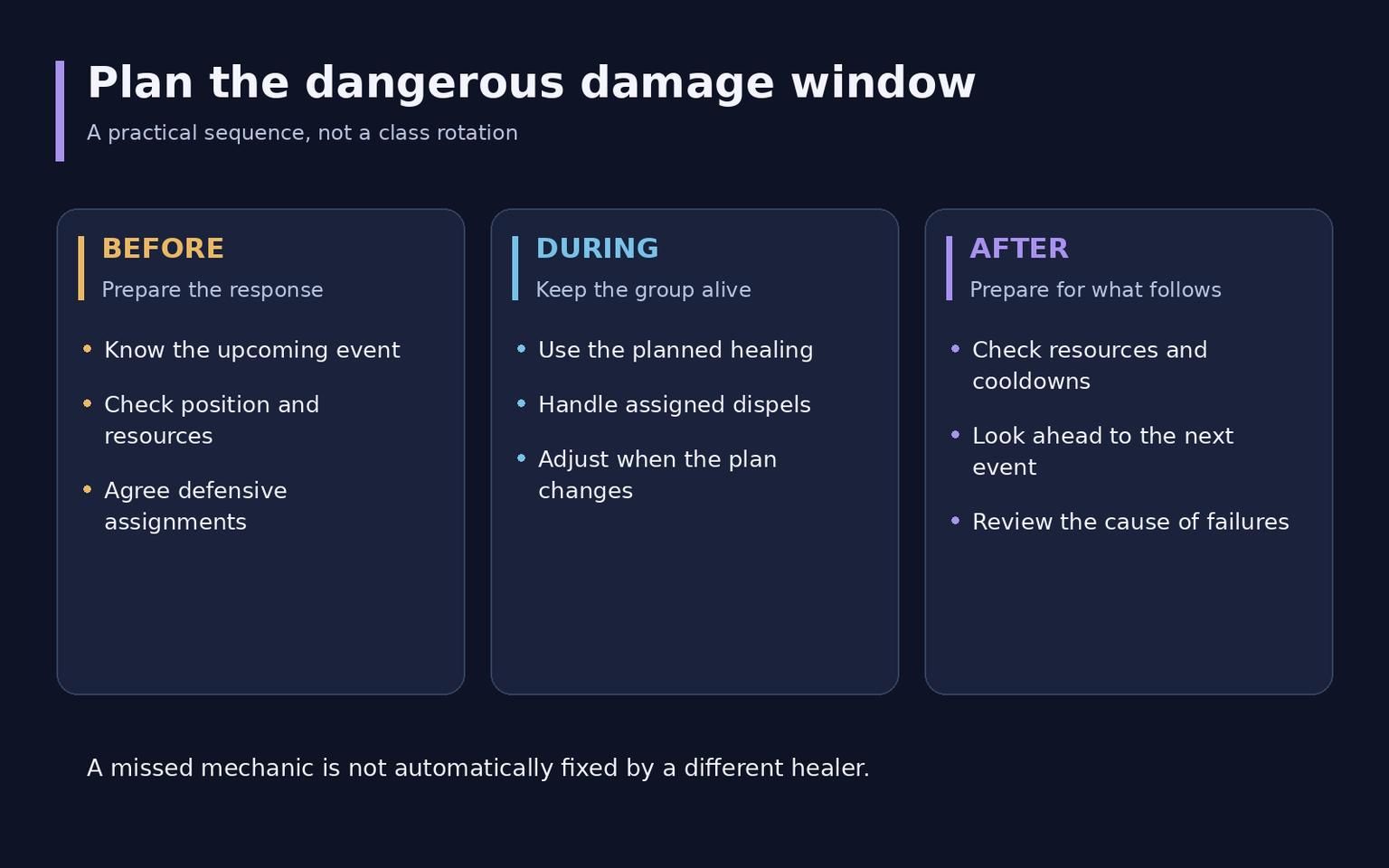
Check how your interface displays removable effects, important abilities and resources. After a failed attempt, identify the cause. A missed interrupt, poor positioning or unused personal defensive is not automatically solved by changing healing specialization.
Solo play and PvP
These rankings concern group PvE. They should not be transferred to Solo Shuffle or other PvP modes, where control, survival and interactions with opponents are assessed differently. A separate PvP choice needs an appropriate guide and talents.
For questing and exploration, consider damage convenience and the option to change specialization. The strongest raid healer is not automatically the most comfortable character for solo tasks. This guide does not create a universal solo-play ranking.
Frequently asked questions
Who is the best Mythic+ healer?
Holy Paladin and Restoration Shaman share the highest category in the selected Icy Veins list. Your team's tasks, talent choices and player experience still affect the decision.
Which healer should I bring to a raid?
The Icy Veins raid table places Restoration Druid and both Priest healing specializations in its highest category. Check roster needs and defensive assignments before changing character.
Which specialization suits a beginner?
Consider Holy Priest if direct, reactive healing feels comfortable. If another style appeals more, practise it in familiar encounters. Comfortable control is more useful than someone else's universal promise of simplicity.
Should I change class after every update?
No. First check talent changes and the specific problem your team faces. Patch 12.1.5 includes adjustments to healing interactions for Druid and Evoker, so older builds deserve a review, but a new date alone does not require a new character.