FC 27 Career Mode: Dynamic OVR, Transfers and Squad Planning
A successful FC 27 Career season begins with understanding the squad rather than signing the most recognisable available player. A manager must balance the club's objectives, a playing model, individual minutes and the budget. A decision that looks attractive today can create problems several months later.
The rebuilt transfer system and Dynamic OVR make that balance more visible. A current rating does not always represent long-term ability, while an affordable initial payment does not show the complete cost of a deal. Look at the circumstances behind the figures before making your decision.
This guide covers FC 27 Manager Career: choosing a save, managing the first transfer window and planning the opening season. Evaluate fees and development against your selected squad database and club circumstances.
Choose a career and establish your starting conditions
Manager Career suits players who want responsibility for the whole club, including its squad, tactics and finances. Player Career follows one footballer. In the former, review team objectives and squad depth; in the latter, focus on the role, individual tasks and opportunities to play.
Decide which squad database to use before starting. Download the latest update for a new career if you want current transfers and ratings. Remember which database you selected: it may explain differences from an older guide. Do not confuse updating data with changing the history of seasons already played.
Select a manageable difficulty and gameplay pace. Consistent conditions help you assess decisions. Changing difficulty, the team and the tactics together makes the cause of a result difficult to identify. Begin with a setup you understand, then increase the challenge when matches stop demanding attention.
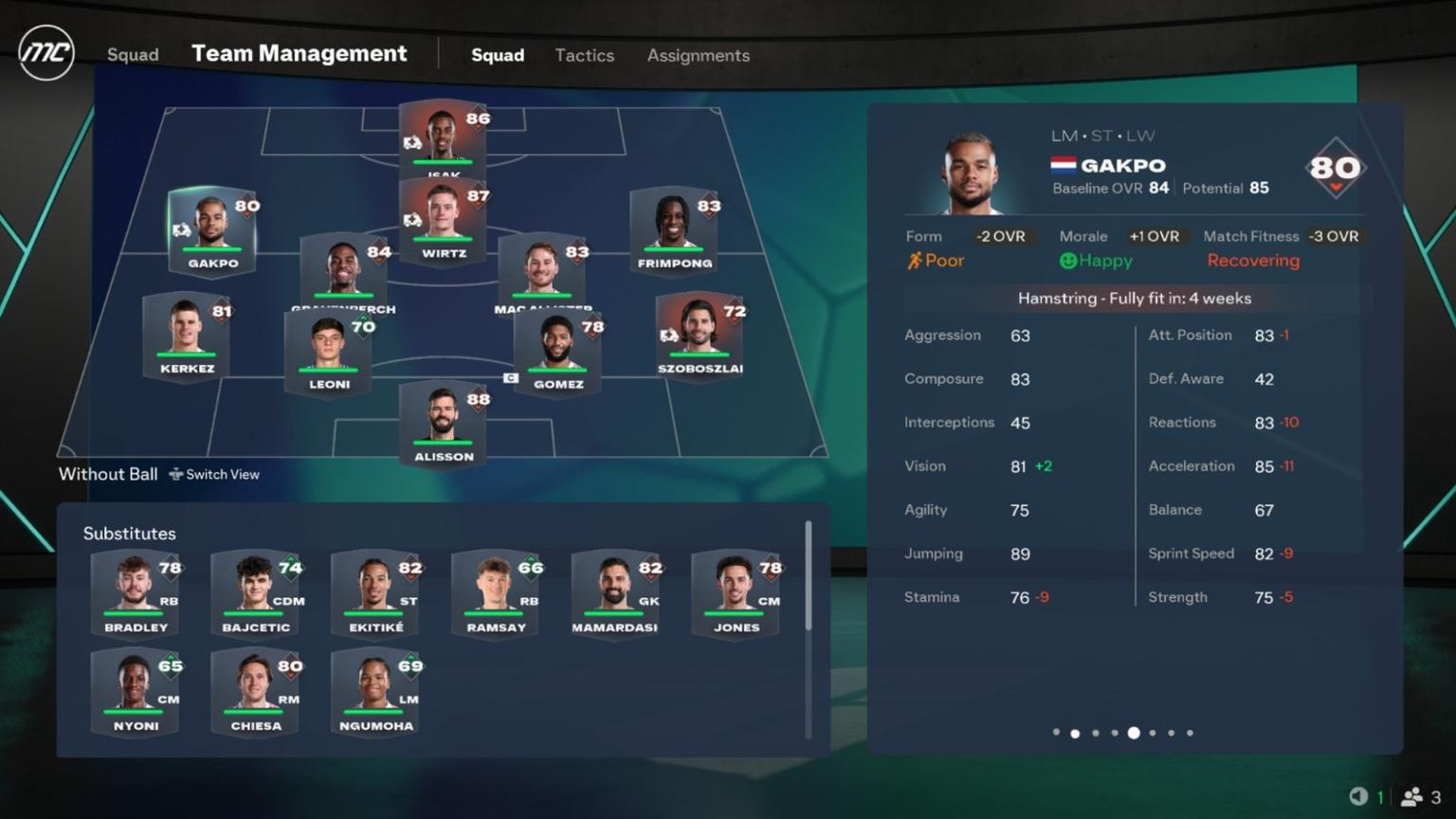
A Career Team Management example presents the lineup alongside the selected player’s condition.
Audit your team before the first window
Group players by their actual place in your plan: starters, rotation, development and possible departures. Account for different competitions and positions that need cover. Two outstanding forwards do not replace a usable defender when an injury occurs.
Question | What to review | Management decision |
|---|---|---|
Where is the immediate weakness? | Recurring squad problems | Upgrade the role rather than a famous name |
Who needs minutes? | Agreed roles and competition | Plan rotation before frustration develops |
Who has a development path? | Reports, age and intended use | Set suitable responsibilities and workload |
What is too expensive? | Wages and total obligations | Assess the whole deal rather than its first payment |
Prepare an alternative if a key player becomes unavailable. A change of shape or midfield partnership may solve the problem without a signing. Using flexibility already in the squad can preserve the budget for a position that genuinely needs help.
Read Dynamic OVR as a state, not a verdict
FC 27 Dynamic OVR responds to Form, Morale and Match Fitness. It represents a player's current condition and can change during a season. A decline does not automatically mean permanent loss of talent, and a temporary rise is not necessarily a new baseline.
When a rating drops, investigate in a consistent order: readiness, workload and injuries; playing time and the promised squad role; recent performances and positional suitability. Buying an immediate replacement can increase competition and make the underlying problem worse.
Rotation should be planned rather than used as punishment for one poor match. Review the coming fixtures and identify opportunities for squad players. Do not promise a role that your system cannot provide merely to obtain a signature.
Judge long-term progress across a longer period. Assess the player against their job: goals are not a defender's only contribution, and a young substitute's development is not captured by the team's result alone. Read a current OVR movement alongside its context instead of making it the sole reason to sell.
Approach transfers with alternatives and time
Write a profile before scouting: position, responsibilities and the maximum total commitment the club can sustain. Then identify alternatives. FC 27 negotiations move through stages, with an enquiry preceding permission to discuss a deal. Circumstances can change during the process.
Do not build a season plan as though the first positive response were a completed signing. Track the negotiation status and leave time to pursue another option. Finalising a transfer can require further decisions, particularly when other clubs compete for the same player.
Delegation can reduce the number of steps you handle, but it does not remove responsibility for squad planning. Set clear financial and role limits, then check that the completed signing still meets the original requirement.
Instalments spread a cost rather than remove it
Deferred payments remain obligations in future seasons. Assess the initial amount, later payments, wages and additional terms together. Comparing offers solely by the amount paid immediately gives an incomplete picture.
Review future payments in Contracts & Clauses within the Transfer Hub. It brings together contracts, bonuses, clauses and instalments. Before making another offer, compare existing commitments with the budget available for later seasons.
Do not buy another player on deadline day simply because money remains available. Leave space for renewals and problems that appear during the season. Declining an unsuitable opportunity can be a productive management decision.
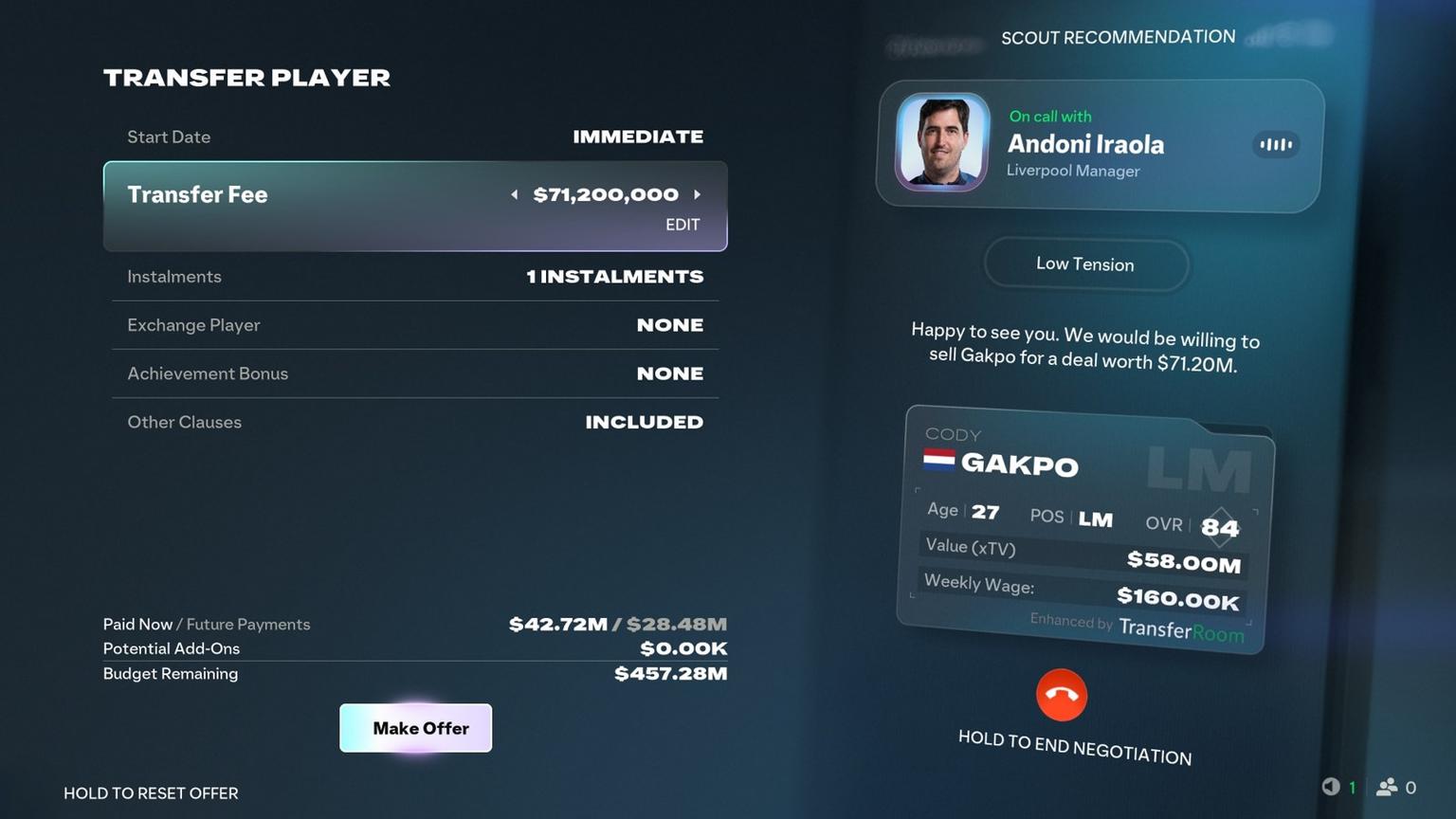
Negotiations separate the immediate payment, future commitments and remaining budget.
Give young players a route to minutes
For each prospect, identify where they will play during the next few months. A starting role, rotation and a loan are different plans. Choose according to actual competition. Five prospects in one position cannot all benefit from the same available place.
Read potential assessments together with reports and present usefulness. Do not build the whole project around an external POT figure. Development and current condition matter, while save data may differ from a launch database. A useful prospect should contribute before reaching a projected peak.
Match development to the job. A player recruited to help build from defence needs suitable receiving and passing qualities, not merely speed. A youngster with a lower overall rating may fit that task better, but the decision must be evaluated within your squad.
Your first-month checklist
Review club objectives, contracts and positional cover.
Choose a main playing model and one alternative.
Identify one or two priority upgrades and backup targets.
Allocate minutes across the approaching fixtures.
Investigate Dynamic OVR changes after matches.
Recalculate future obligations before making the next offer.
Review those initial decisions after the opening stretch. Look for recurring situations: players who cannot receive the ball, areas where shape breaks down, and footballers who need recovery. This creates a more useful plan than replacing the entire tactic after every defeat.
FAQ
Should I choose Manager Career or Player Career?
Manager Career puts you in charge of a club. Player Career develops one footballer's story. Choose according to whether team building or individual progression interests you more.
Does Dynamic OVR replace permanent development?
No. It describes a changing state. Consider long-term development, reports and the save's circumstances separately from current form.
Can I pay for a transfer in instalments?
FC 27 supports instalment payments. They spread the expense, but those future payments still belong in the budget for subsequent seasons.
Why does an old transfer tip no longer work?
The database, club, player condition and game version can differ. Update 1.0.4 also changed particular negotiation and generated-player situations. An old example is not a guaranteed deal-making method.