Arcane Mage Guide: Rotation, Talents, Stats & Best Builds
Arcane Mage Overview
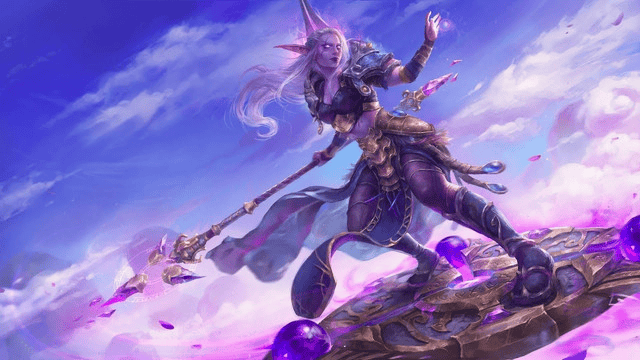
Arcane Mages specialize in manipulating space and time. Their kit allows them to reset cooldowns more often than any other Mage spec, making them flexible and responsive. They also boast some of the best burst potential in the game.
Mechanically, Arcane is a ranged DPS specialization that uses direct-damage spells, mana control, and short cooldown cycles. Success relies on planning cooldowns and knowing when damage will hit. While Mages have excellent tools for survival, they lack healing and must anticipate danger. Arcane's burst happens every 70–90 seconds, depending on use of Shifting Power. Its mobility handles frequent movement well, though long relocations can disrupt flow.

Arcane Mage Strengths and Weaknesses
Strengths
Extremely high burst damage in both single-target and AoE via Arcane Surge and Touch of the Magi
Strong utility tools like Time Warp, Spellsteal, Polymorph, Remove Curse, Blast Wave, and Dragon’s Breath
Single-target scales upward with multiple enemies due to Resonance
Excellent defensives like Greater Invisibility, Ice Block, Alter Time, Mirror Image, and Prismatic Barrier
High mobility through Blink, Alter Time, and Shimmer or Master of Time
Weaknesses
Must execute bursts cleanly to perform well
Needs to be near targets for Arcane Explosion
Has no self-healing and relies on avoiding damage
Poor mana management leads to sharp damage drops
Arcane Mage Cheat Sheet
Spec Trees:
Arcane
Spellslinger
Focus Areas:
Talent Builds
BiS Gear
Stat Priority
Weapons and Trinkets
Consumables
Stat Priority:
Intellect > Haste > Versatility > Critical Strike > Mastery
Arcane Mage Changes in Patch 11.1
Arcane Mage has been redesigned again in this patch. The ability Aethervision has been removed following feedback. The Season 1 four-piece bonus returns as a new talent called Intuition. These updates are small but have a noticeable impact on how the spec plays, especially as the popular double-dip mechanic from earlier is not returning.
There are also broader adjustments with performance implications:
Arcane Barrage has received significant buffs and now hits much harder on its own.
Two new talents, Arcane Rebound and Aether Fragment, have been added but are currently not favored due to weak tuning and mechanics.
Resonance now no longer functions in single-target but is more potent in multi-target situations.
Leydrinker can now trigger from Clearcasting and also auto-activates when using Touch of the Magi.
High Voltage received buffs and is now worth considering.
Arcane Explosion was improved slightly, though it still sees little use.
Sunfury now enables Arcane Barrage to work with Burden of Power. Arcane Soul was changed to also increase Arcane Barrage damage during its active period.
Arcane Mage Hero Talents: Sunfury and Spellslinger
Arcane Mages can choose between two Hero Talent trees: Sunfury and Spellslinger.
Sunfury: This style is focused around Burden of Power, which activates after every sixth cast of Arcane Blast or Arcane Barrage. It provides Glorious Incandescence to restore Arcane Charges and boost Arcane Barrage. The single-target rotation closely mirrors AoE because of Burden of Power’s strength. It also adds Spellfire Spheres and a summoned Arcane Phoenix during Arcane Surge, emphasizing visual effects and the Kael’thas theme.
Spellslinger: This path emphasizes Arcane Splinter generation. Talents like Spellfrost Teachings, Orb Barrage, and Nether Precision support frequent use of Arcane Barrage to trigger powerful effects. The AoE potential is higher than its single-target burst, and the overall rhythm feels more classic. The focus is on repeatedly casting Arcane Barrage to keep triggering Splinters and procs.
Key differences between the trees:
Spellslinger has lower raw burst but stronger funneling potential.
Sunfury offers better execute potential but can be inconsistent due to pet AI.
Spellslinger offers more consistent defensive and utility tools.
Sunfury’s utility options are limited, which may reduce its viability.
Even if both trees are balanced in output, Spellslinger’s utility edge makes it more favorable in many scenarios.
Playing an Arcane Mage in The War Within Season 2
Arcane Mage requires deliberate execution and understanding of its resource system. It operates in three major phases:
Bigburn: Combines Arcane Surge, Siphon Storm (from Evocation), and Touch of the Magi. Use potions and trinkets here.
Miniburn: Only Touch of the Magi is active.
Filler: All other times between burst windows.
Key mechanics to remember:
Use Clearcasting to generate Nether Precision, then spend that on Arcane Blast or a buffed Arcane Barrage.
Arcane Blast benefits from Arcane Charges, so maintain four charges when planning to cast.
Hero Talents impact how your rotation works; use the correct priorities based on your chosen tree.
Don’t panic over mana loss—being out of mana after Miniburn is normal. Use Arcane Barrage to reset, rebuild charges, and continue your loop.
Use cooldowns frequently; Shifting Power helps reduce downtime. Holding them for specific mechanics is fine, but aim to maximize casts overall.
Always face where you want Arcane Orbs to go—Spellslinger especially needs good positioning.
Arcane Charges increase Arcane Blast’s cost and damage. Use Arcane Barrage to spend charges for AoE cleave or mana reset. In AoE, get to 4 charges, then use Barrage. If low on mana, don’t worry—just keep the cycle going.
Gearing an Arcane Mage in The War Within Season 2
As a general guideline, the stat priority is:
Haste > Versatility > Critical Strike > Mastery
Intellect remains highly valuable, so upgrades in item level will usually outperform perfectly optimized stat combos. Use Raidbots to simulate your own character, as stat weights can vary depending on your exact gear and talents.
In AoE builds that don’t take Prodigious Savant, Mastery becomes slightly less valuable, but still has some impact. Gear selection should always be evaluated based on your own character's needs and current setup.
What Professions are Best for Arcane Mage?
Professions in The War Within offer very minor performance boosts. You can choose any profession without worrying about falling behind. Some common choices:
Tailoring – Useful for crafting your own cloth armor, which may include pieces close to your BiS.
Alchemy – Lets you craft your own potions and phials, saving gold over time.
Enchanting – Handy for self-enchanting your gear and not relying on the Auction House.
The best choice depends on whether you prefer utility, economy, or crafting flexibility.
What Race is Best for Arcane Mage?
Arcane Mages can be any race in both the Horde and Alliance, including Dracthyr since Patch 11.0.5.
Horde racials to consider:
Berserking (Troll)
Blood Fury (Orc)
Brawn (Tauren)
Magical Affinity (Nightborne)
Alliance racials to consider:
Combat Analysis and Emergency Failsafe (Mechagnome)
Fireblood (Dark Iron Dwarf)
Might of the Mountain (Dwarf)
The Human Spirit (Human)
Entropic Embrace (Void Elf)
Nimble Fingers and Expansive Mind (Gnome)
Dracthyr now provide access to Glide, which may offer one of the best movement options thanks to increased travel efficiency in many encounters.
Ultimately, racial differences are small—usually 0–1.5% DPS variance. Choose the race you enjoy most for aesthetics or lore. You’ll perform just fine regardless.