How to Rank Up in Overwatch: A Practical 5v5 Plan
Climbing faster in Overwatch comes from removing mistakes that repeatedly cost your team a real engagement, rather than simply playing longer sessions. Dying less often before an attack, helping allies at the right moment and turning a won fight into objective progress make your contribution more consistent.
This plan covers regular Competitive Role Queue 5v5. It connects preparation, decisions during a fight and short replay reviews. The advice works for solo players and small groups, but does not promise a particular rank in a week: progress depends on your current skill, opponents and match results.
Start with one role and a small hero pool. Then play several sessions with one measurable task, such as reducing unnecessary first deaths when you do not need to touch the objective. That makes it easier to see what you are improving instead of trying to fix aim, composition, communication and every habit at once.
What actually moves your rating
Matchmaking uses an internal MMR, while your visible rank represents your position on the competitive ladder. Wins and losses affect progression; there is no universal number of wins required for a promotion. The size of a change also depends on the ranking context, so someone else's result over ten games is not a prediction for you.
The post-match progress bar shows the rank change and applicable modifiers. High damage, healing or elimination numbers do not directly buy extra MMR. Scoreboard statistics can inform a review, but your actions should serve winning and the objective rather than a more attractive scoreline.
For example, shooting a tank can inflate damage while an enemy marksman controls the important high ground untouched. A support can heal heavily after a poor engagement without saving the ally who mattered at the decisive moment. Evaluate the useful action that changed a fight, rather than only the numbers it left behind.
Step 1: narrow your pool while keeping different answers
Choose a main hero and two alternatives within one role. The main provides repeatable practice; the alternatives cover tasks that main handles poorly. You do not need a new character after every defeat. You need a clear explanation of why the current choice cannot do its job.
Role | What the pool should cover | A useful question |
|---|---|---|
Tank | Holding a position and reaching high ground | Can the team reach its target behind me? |
Damage | Confident ranged fire and close pressure | Who am I forcing away from a useful position? |
Support | Steady frontline assistance and answers to pressure | Do I have a safe sightline to allies? |
Do not automatically transfer an old plan onto a reworked character. For example, October's changes made Sombra a support. Check a hero's abilities and role before entering ranked if you have not played them recently. Your first encounter with a substantially changed kit is better handled without putting a Competitive result at stake.
Step 2: prepare one stable setup
Use sensitivity and bindings that let you control the hero without searching for inputs. Avoid changing settings after every disappointing game. When an adjustment is necessary, change one parameter and give yourself time to adapt. Otherwise, a setup problem becomes hard to distinguish from a normal execution mistake.
Before queuing, warm up the action you actually need. A shooting hero benefits from tracking and short adjustments; a support from shifting attention between an ally and a threat; a mobile tank from practicing safe entry and exit routes. The purpose is to regain control, rather than set a personal record before your first match.
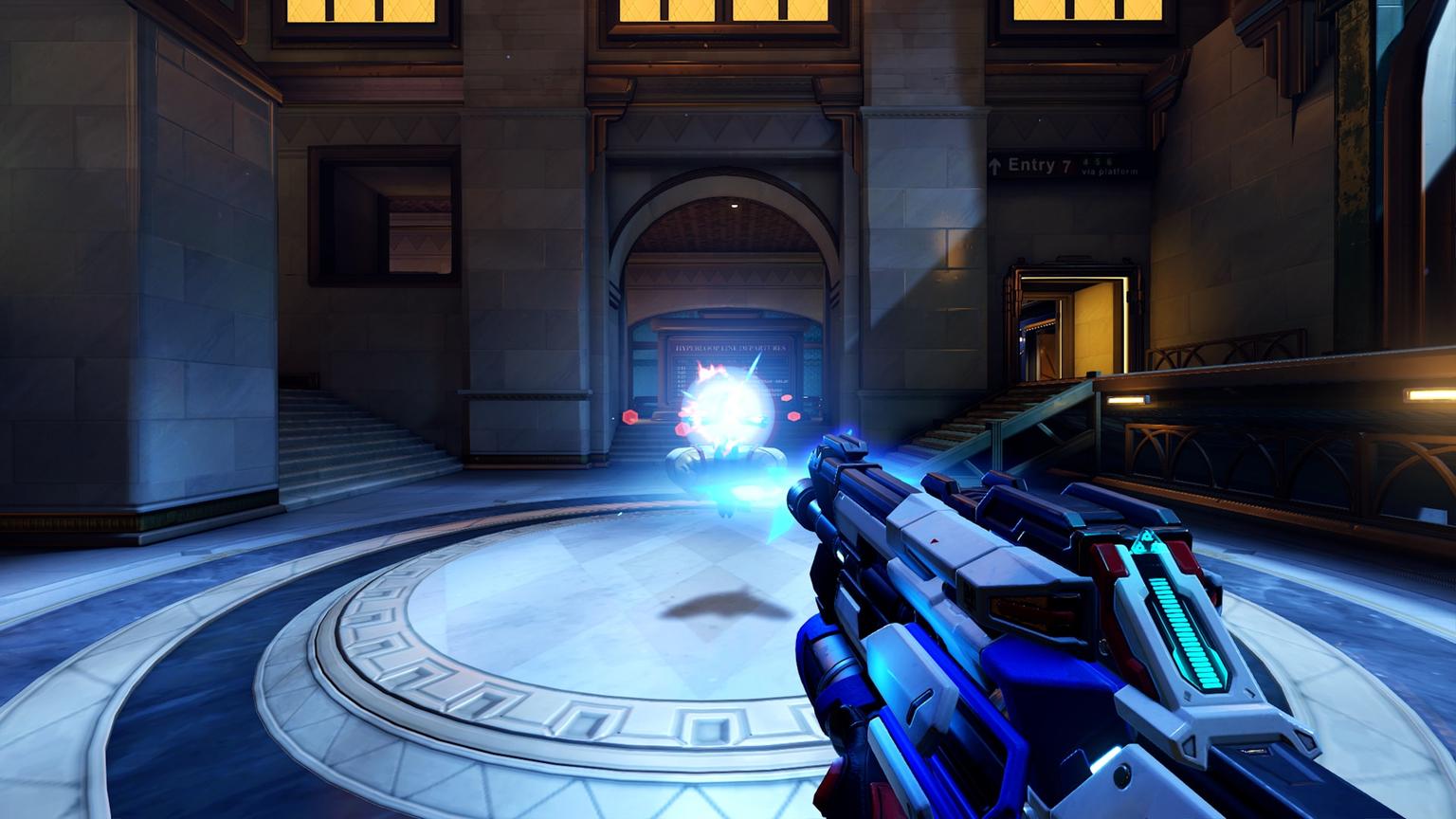
A warm-up should restore control over the chosen hero’s actions; this image shows Soldier: 76 firing.
Step 3: enter fights from a workable position
Before an engagement, identify nearby cover, a retreat route and your supports' locations. A planned corner reduces the number of situations in which only an ability can save you. If the plan requires an ally to heal through a wall or cross an exposed firing line, change your position.
High ground is useful when it provides vision, cover and access to the fight. Standing upstairs away from everyone purely because it is high ground achieves little. Likewise, a side angle should complement your team's pressure rather than pull you into a long isolated duel.
After several allies fall, assess whether the engagement can still be won. If the objective does not require an immediate touch, retreating early and regrouping is often better than dying late. Repeated individual entries drain team time even when every player manages to produce substantial damage.
Step 4: spend abilities for the next event
Before using an important defensive tool, ask what will happen in the next few seconds. Do you need to survive a dive, leave a dangerous sightline or support your own engagement? An ability spent on small incidental damage may be unavailable when the opposition finally commits.
For example, when playing Ana against a mobile threat, identify cover and an ally you can retreat toward. Once Sleep Dart is spent, holding the same exposed angle becomes riskier. Your next decision should be to reposition before the attack, rather than rely on landing every shot after the duel begins.
You do not have to wait forever for a perfect moment. If delay costs an ally's life or an important position, use the resource. The useful habit is linking the decision to a specific threat, then checking the replay to see whether you read it correctly.
Apply the same principle to ultimates. Before a fight, agree on one opening tool and one answer to the enemy engagement. When you already have a decisive advantage, avoid automatically adding several more ultimates. Equally, retaining a full meter through multiple lost fights is not meaningful economy.
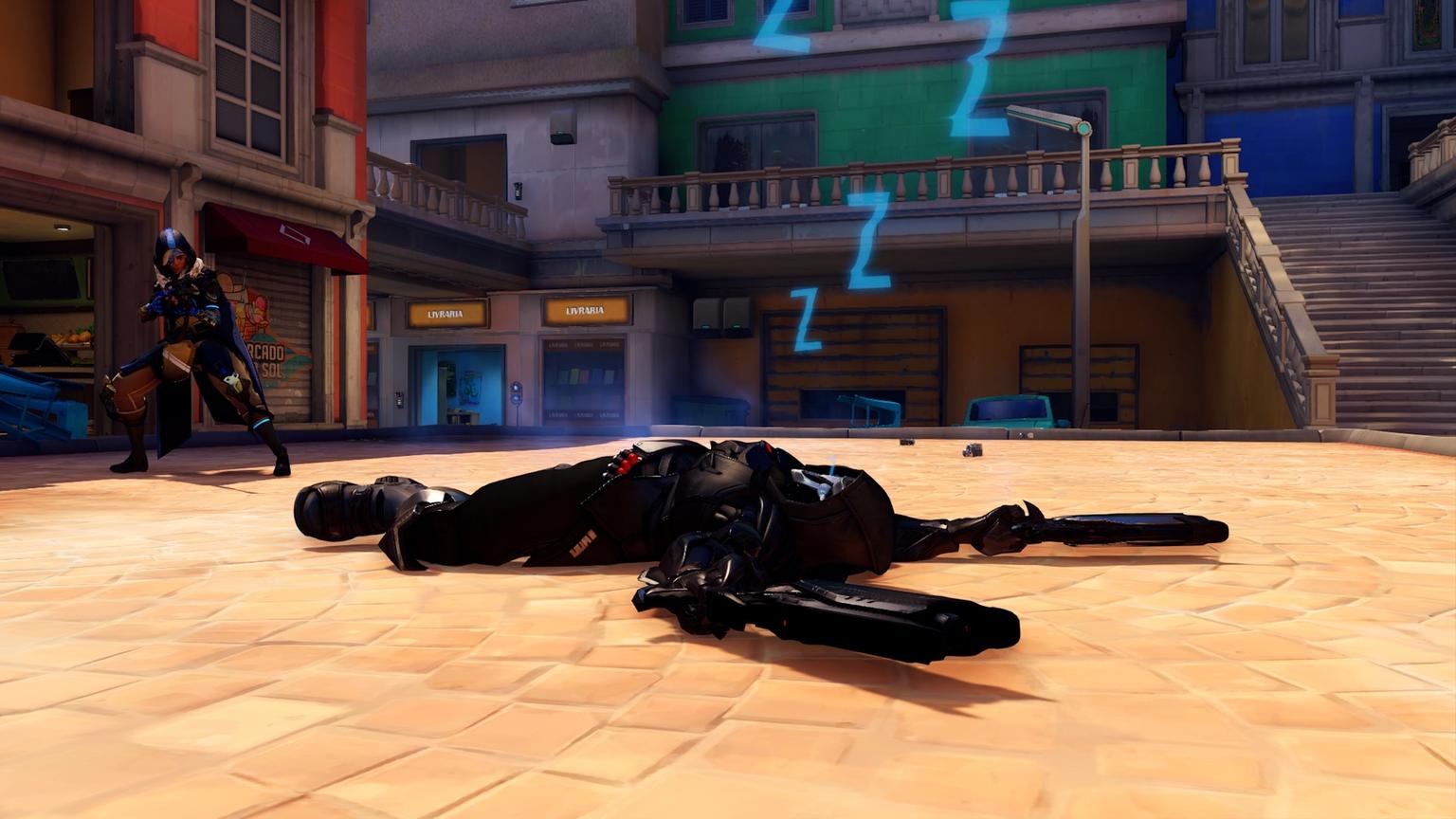
Sleep Dart is a resource against a dangerous engagement. If it has already been spent, reposition early.
Step 5: communicate short, usable information
A good call answers one question: where to look, when to engage or which resource is unavailable. Examples include waiting for the tank, warning about a marksman on right high ground or starting after your ultimate. These calls are easier to act on than a lengthy explanation of previous mistakes during the next engagement.
Ping a specific threat without turning signals into constant noise. If voice chat damages your focus, use the available markers and short messages. Arguing over blame rarely helps identify the next push in time.
When playing with a friend, define one coordinated action: challenge high ground together, protect a particular position or use an ultimate after an agreed signal. Grouping does not create an automatic win. Its advantage appears when two people actually execute the same plan.
Step 6: review causes rather than the entire match
Open one replay and locate three moments: the first avoidable death, a lost fight with an available ultimate, and the period immediately after a won engagement. The final example is especially useful: a team can win the fight, waste time chasing and fail to claim the next position.
Pause before the mistake. What information was available then? Where were allies, which abilities had already been used, and which route did the enemy control? Look for a decision you can repeat in the next game. Saying that you should play better trains nothing; keeping an exit before jumping gives you a specific action.
If you often die first, review cover and the timing of your exposure.
If you deal damage for a long time without results, review target selection and attack direction.
If healing always seems absent, first inspect sightlines and your own route.
If you lose the advantage after a won fight, examine chasing, regrouping and objective decisions.
A plan for your next five sessions
Use the first session to record a recurring mistake. In the second, practice one correction. In the third, test it on another type of map. Use the fourth to work on a coordinated action with teammates, and the fifth to compare replays. After these sessions, compare decision quality as well as the movement of your medal.
A journal only needs your role, heroes, one task and a short conclusion. Separately note whether you applied the correction. Even if wins still fluctuate, removing the same repeated early death is a concrete learning result. Choose the next task after that habit becomes reliable.
FAQ
How many wins do I need to rank up?
There is no fixed total. Follow your own progress bar and changes after matches. Another player's short winning streak does not establish your progression speed.
Does top damage help raise MMR?
Not by itself. Scoreboard numbers do not grant a separate MMR bonus. Useful damage helps win the engagement and complete the map objective.
Should I switch after every death?
No. First identify the cause: composition, distance, route or engagement timing. Switching helps when the new kit solves that identified problem.
When should I end a session?
When you stop applying your chosen task and start playing automatically. A short break is more useful than trying to recover lost rank immediately at any cost.