WoW Midnight Shaman Guide: Elemental, Enhancement and Restoration
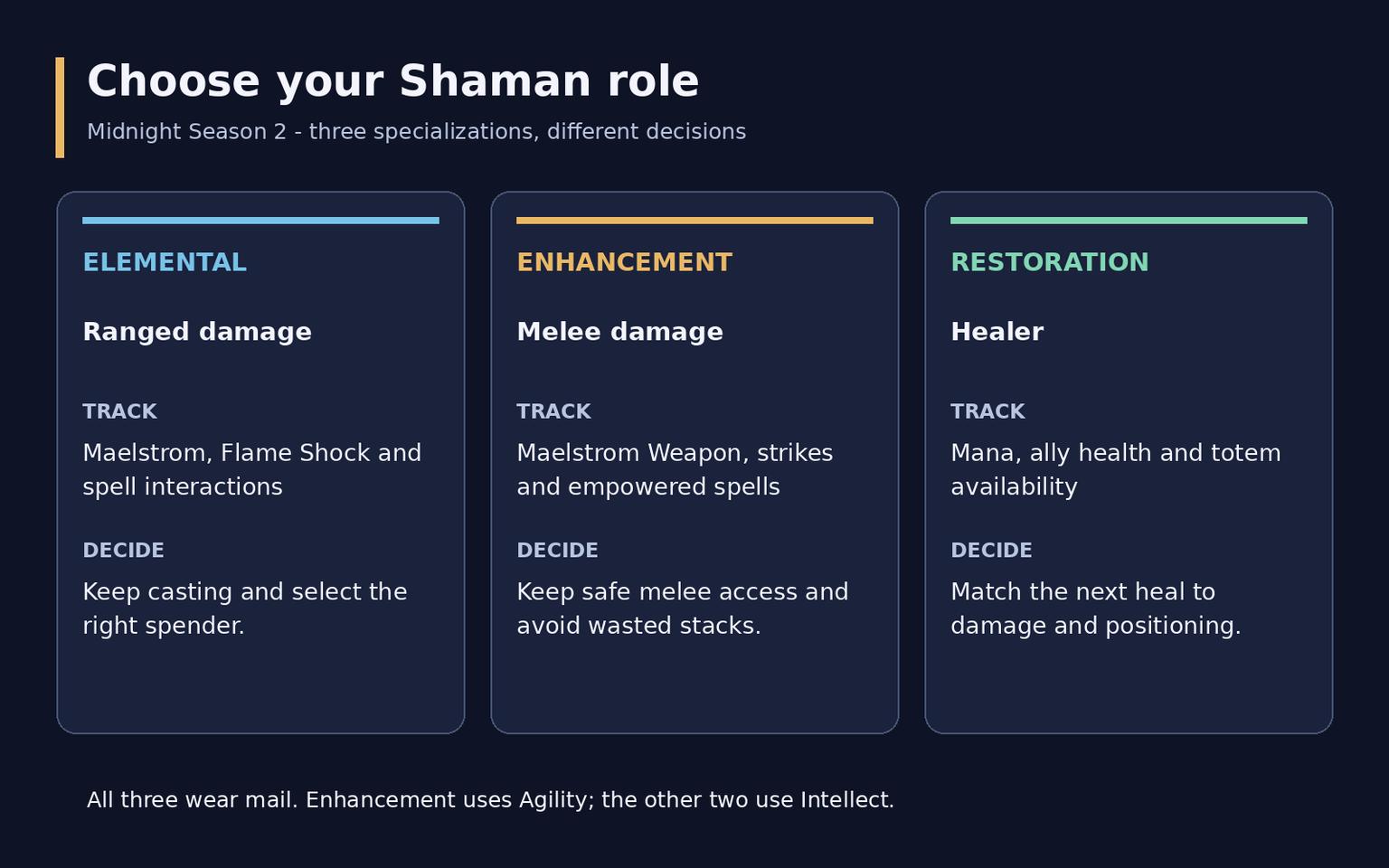
Shaman in WoW Midnight suits players who want their own performance to matter alongside practical group support. Elemental deals ranged spell damage, Enhancement combines melee strikes with magic, and Restoration heals allies. Shared totems and class abilities connect these roles, but each specialization spends its attention differently.
This guide was checked on October 15, 2026 for Season 2 and patch 12.1.5. It covers role selection, resource decisions and preparation for dungeons and raids. Start by choosing the responsibility you want to perform. A damage priority cannot teach a healer which injured player needs the next response.
Specialization | Role and resource | Central responsibility |
Elemental | Ranged damage, Maelstrom | Maintain casting and choose the appropriate spender |
Enhancement | Melee damage, Maelstrom Weapon | Connect strikes and empowered spells without wasting procs |
Restoration | Healer, Mana | Match healing to damage, ally positions and urgency |
All three specializations wear mail. Enhancement uses Agility, while Elemental and Restoration use Intellect. Inspect weapons, trinkets and saved equipment sets when changing roles: a suitable armor type does not guarantee that every equipped item serves the new job.
Choose Elemental if you enjoy casting and planning movement before a mechanic arrives. Enhancement is for players comfortable making frequent decisions beside the enemy. Try Restoration because you want to manage the group's health, rather than because you expect healing to mean repeating a small fixed sequence.
Talents and the current patch
Choose class talents around the encounter's demands: personal defense, movement, interrupts and the totems your group needs. Then select the specialization build and a compatible Hero Talent tree. Save separate setups for raids, Mythic+ and solo content. After importing a build, inspect both selected nodes and your action bars, especially when its author used a different equipment set.
Specialization | Hero Talents | What changes in practice |
Elemental | Farseer / Stormbringer | Ancestor support / lightning and Tempest interactions |
Enhancement | Stormbringer / Totemic | Maelstrom Weapon cycling and Tempest / Surging Totem and fire interactions |
Restoration | Farseer / Totemic | Ancestors and targeted healing / stronger totems and healing placement |
Each specialization also has its own Apex talents: Feedback Loop for Elemental, Storm Unleashed for Enhancement and Stormstream Totem for Restoration. These belong to particular builds. Their priorities cannot be transferred between roles. Restoration's Stormstream Totem involves procs; it is not an additional unrestricted healing button that is always available.
Patch 12.1.5 fixes Static Accumulation stopping automatic Maelstrom Weapon generation during certain Ascendance or Doom Winds overlaps. For Restoration, extending Riptide through Swelling Tides now extends its timer rather than resetting it. Nature's Swiftness and Ancestral Swiftness also correctly make Healing Rain instant.
Keep those fixes separate from earlier Season 2 tuning. Enhancement's October 6 adjustments increase all ability and auto-attack damage by 4%, with a separate 35% Lava Lash increase. These are PvE adjustments and do not apply in PvP. They also do not automatically require a completely new ability priority.
Current Enhancement guides favor Stormbringer. Elemental overview recommendations disagree about which Hero tree leads, so compare the current encounter build, movement requirements and your own simulation rather than treating an overview label as universal. For Restoration, consider totem placement and targeted healing demands alongside expected throughput.
Elemental and Maelstrom decisions
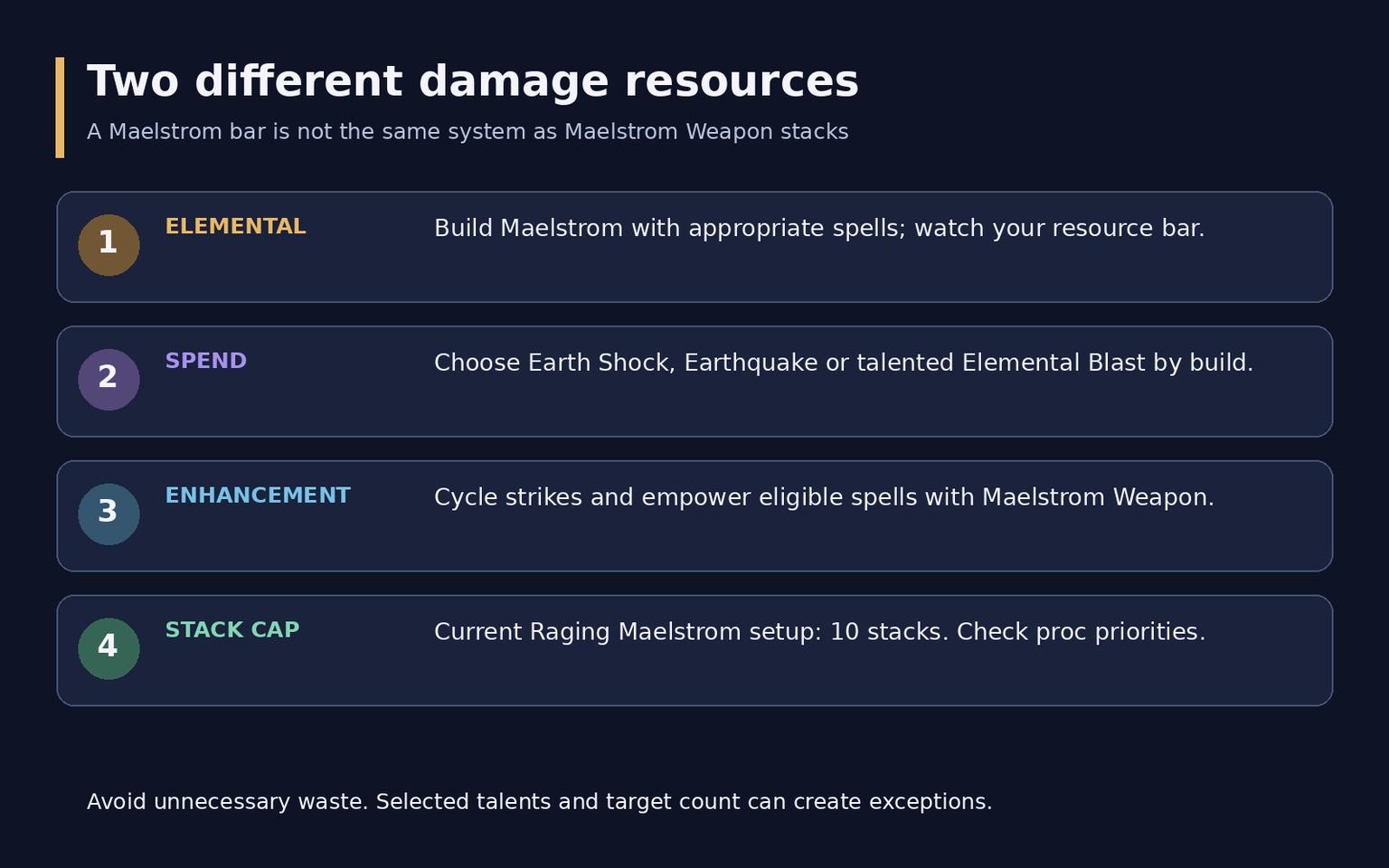
Lightning Bolt, Chain Lightning and other appropriate generators build Maelstrom. Earth Shock, Earthquake and a talented Elemental Blast provide spending options. Your actual choices depend on selected talents and target count. Several enemies appearing does not make every spender decision identical.
Maintain Flame Shock on relevant targets and use Lava Burst with its interactions in mind. Lava Surge changes spell availability; watching only a memorized sequence makes those opportunities easy to miss. Before the next cast, consider the active empowerment, your resource level and how long the target will remain alive.
Stormkeeper and Ascendance need useful damage opportunities. Establish a position from which you can keep attacking before activating them. A powerful buff contributes little if you immediately have to run for several seconds or lose the target. However, repeatedly waiting for perfection can remove an entire additional use from the encounter.
Avoid unnecessary Maelstrom waste, while recognizing that some Stormbringer interactions create exceptions. Learn to see the approach to the cap first. Add build-specific exceptions once you understand why a generator can occasionally have greater immediate value than a spender, even when resources are plentiful.
Use suitable instant casts and movement tools to reposition deliberately. Repeatedly cancelling casts or moving without a reason reduces damage even with strong gear. Remaining in a lethal area to finish a spell is equally unproductive: surviving preserves all the actions you can take afterward.
Enhancement and Maelstrom Weapon
Enhancement uses Maelstrom Weapon stacks to empower eligible spells. This is different from Elemental's resource bar. Stormstrike, Lava Lash and Crash Lightning connect the melee side of the kit, while empowered Lightning Bolt, Chain Lightning and Tempest provide spell damage between those attacks.
The current setup with Raging Maelstrom stores up to 10 stacks. Old advice about holding 20 stacks does not describe this build. A common Stormbringer starting point is spending 10 stacks on Tempest or Lightning Bolt; multiple-target situations and selected interactions change the conditions. Elemental Tempo's cooldown reduction is another reason to assess the current state rather than wait mechanically.
Crash Lightning matters against a single target as well. Do not remove it from consideration because its name and visuals suggest an area attack. Hero Talents change the relationships between strikes, procs and the totem, so switching between Stormbringer and Totemic requires reviewing priorities again.
Situation | Inspect | Practical response |
Stacks approach the cap | Available empowered spender | Avoid losing new stacks without a reason |
Doom Winds activates | Strikes and resource spending | Follow the active buff's priority |
Enemies reposition | Melee access and totem location | Preserve safe target access |
Heavy damage approaches | Personal defense and safe ground | Survive to continue the next damage window |
Melee performance depends on reaching the enemy. Pick a position where dangerous ground effects remain visible, then resume attacking promptly after a mechanic. Helping an ally with healing can be valuable, but your main assignment remains damage. Weigh the lost offensive action against the actual danger to the group.
Restoration and totem placement
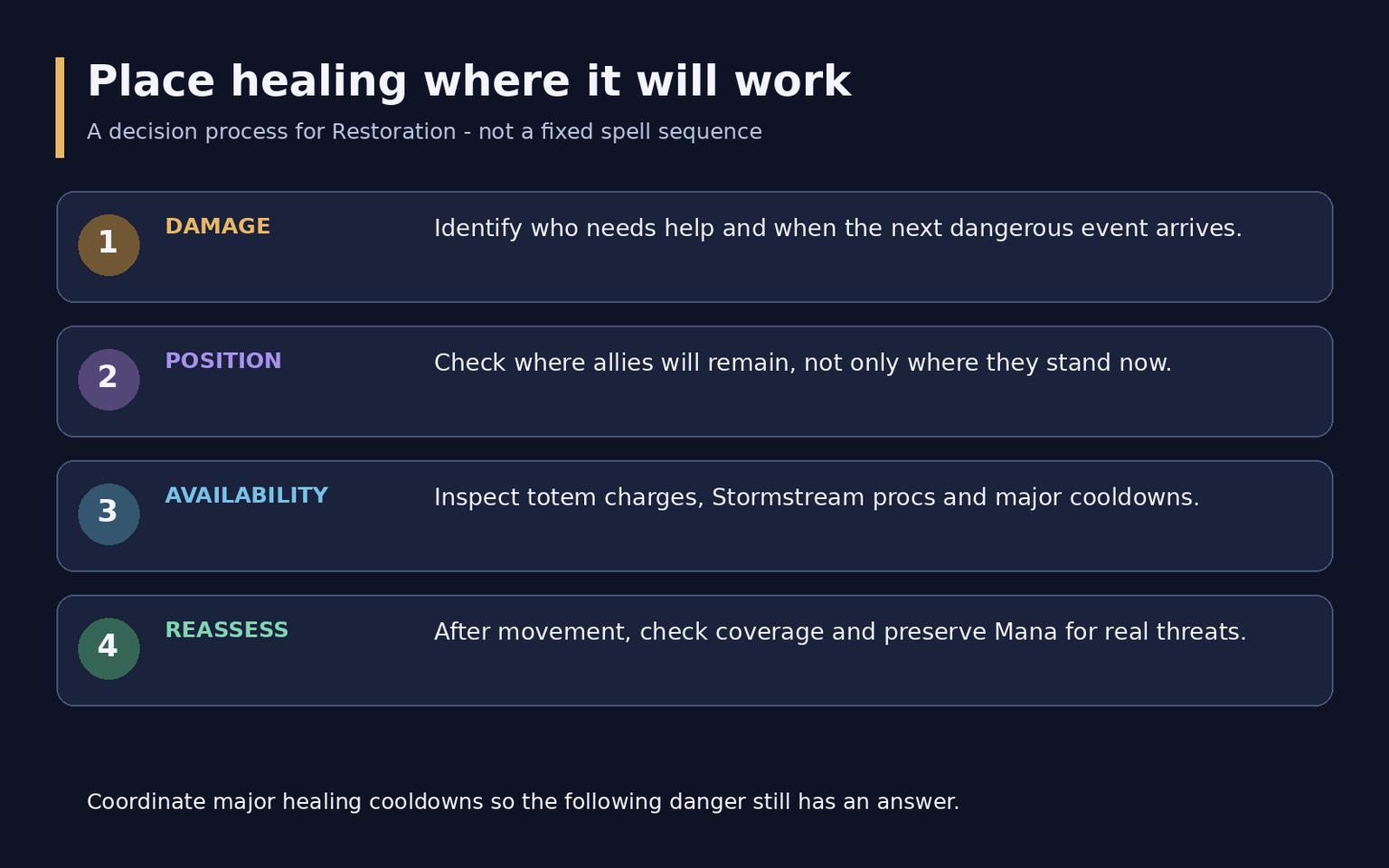
Restoration chooses a response to the damage actually occurring. Riptide supports selected allies, Healing Wave answers targeted needs, and Chain Heal reaches multiple players. Their positions matter: an available group heal cannot deliver the intended result if injured allies are too far apart.
Place Healing Rain where players will remain. With Totemic, Surging Totem changes how you organize that healing. Automatically dropping it at the tank's current location can waste its value when the group is about to move. Consider the route and the next dangerous mechanic before committing the ground effect.
Watch Healing Stream Totem charges and Stormstream Totem procs. Fully unlocking the Apex talents allows the empowered version to be used without consuming regular charges, but obtaining it still has conditions. Keep its availability visible instead of relying on an assumed sequence or a remembered interval.
Before combat, check the appropriate shields and major healing cooldowns. Prepare available healing when the encounter starts with immediate damage. During quiet periods, avoid spending Mana repeatedly healing already healthy allies. Add damage when the group is safe, while preserving the ability to answer the next threat.
Coordinate major responses with other healers. Spending several strong cooldowns together on moderate damage leaves the following danger uncovered. In dungeons, watch effects on the entire party as well as the tank's health: an unexpected death can begin with a smaller event that went unnoticed.
Group utility and personal survival
Shaman contributes most when the right tool answers a specific problem. Before starting, inspect which abilities your specialization and selected talents actually provide. Do not assume that every totem remembered from an earlier expansion remains available in the current build.
Task | Example tool | Check beforehand |
Interrupt a dangerous cast | Wind Shear | Assigned target and interrupt order |
Survive an incoming hit | Astral Shift | Activation before damage arrives |
Remove a suitable enemy buff | Purge | Whether the effect can be dispelled |
Answer fear or poison | Tremor Totem / Poison Cleansing Totem | Effect type and selected talents |
Accelerate group damage | Bloodlust / Heroism | Agreed timing and existing lockout |
Maintain Skyfury. Interrupts and dispels become more useful when the group identifies priority targets beforehand. Ghost Wolf helps you reach a safe location, but travelling in that form does not itself perform your offensive or healing assignment.
Do not wait until almost dead to use protection against a predictable hit. Reincarnation offers a chance to return after death, but inspect the location and the next mechanic first. Immediately resurrecting into a continuing lethal effect rarely improves the situation.
Equipment and consumables
Compare complete damage loadouts in simulations. For healing, also account for the encounter's healing pattern and Mana demands. Weapons, trinkets, set bonuses and secondary-stat relationships all matter. Sorting by item level alone cannot evaluate the whole combination.
Specialization | Starting point | What needs individual assessment |
Elemental | Intellect and Mastery | Secondary-stat balance and Hero build |
Enhancement | Agility and balanced secondaries | Stormbringer and Totemic have different needs |
Restoration | Intellect and Critical Strike | Encounter demands, response speed and survival |
Enhancement uses Forest Hunter's Armor Kit for legs; Elemental uses Sunfire Silk Spellthread, while Restoration uses Arcanoweave Spellthread. Do not transfer leg enhancements between roles because they occupy the same row in a comparison. Choose weapon enchants and gems for the actual equipment set as well.
Elemental can use Flask of the Magisters or Flask of the Shattered Sun to address Mastery and Critical Strike needs. Enhancement Stormbringer chooses a flask according to its existing secondary-stat balance; Totemic's main starting point is Flask of the Magisters. Restoration can use Flask of the Shattered Sun in raids and assess Flask of Thalassian Resistance for defensive value in Mythic+.
Light's Potential is a straightforward combat potion option. Potion of Recklessness needs a check of your stats and build. Carry Concentrated Silvermoon Health Potion for personal emergencies. Choose food for your primary stat, such as Silvermoon Parade or a suitable personal meal. Avoid spending the entire budget on expensive enhancements for items you expect to replace immediately.
Enhancement's own Windfury Weapon and Flametongue Weapon must not casually be replaced with oils or sharpening stones. Choose professions around costs and interests. Making supplies for yourself can be convenient, but one profession pairing is not mandatory for every Shaman.
Getting started and common questions
A damage specialization is a practical starting point for solo leveling; prospective healers benefit from trying straightforward group activities earlier. Learn the resource and core actions first, then add movement, defense and ally support. Simple friendly-target macros may make input easier, but they cannot choose the correct heal for you.
Which specialization is easiest to start with
Elemental offers a clear introduction to ranged casting. Enhancement asks you to adapt to melee access and a faster stream of decisions. Choose healing if you enjoy responding to a changing party state. Begin with an understandable build before adding every possible interaction.
Should you change race for performance
First confirm that your chosen race can be a Shaman in the current client. Racial utility depends on the content. Before paying for a race change, improve missed actions, positioning and unused defensive abilities; those are practical problems you can address immediately.
Does the same build work in PvP
Choose talents, defenses and responses to crowd control specifically for PvP. PvE buffs do not always apply against players. The resource fundamentals still matter, but they do not replace preparation for arena or battleground situations.